A major coastal storm can change a beach significantly in a relatively short period of time.
High water levels, waves and strong coastal processes can move large quantities of sand and shingle, altering the height, width and profile of a beach. Material can be displaced along or across the frontage, beach crests can be lowered and structures that were previously protected by beach material can become more exposed.
Where the beach itself forms an important part of the coastal defence system, those changes can affect the protection provided to communities, infrastructure and assets behind it.
That is why inspection, assessment and, where required, rapid intervention can become important following severe weather.
How does a storm change a beach?
Beaches are naturally dynamic environments. Sand and shingle are continually moved by tides, waves and currents, which means beach profiles change naturally throughout the year. Severe weather can accelerate that process considerably.
The effects will vary according to the coastline, the direction and energy of waves, the tide, the type of beach material and the existing coastal defence system. Following a major storm, it may be possible to see:
- Significant movement of sand or shingle
- Lower beach levels
- Reduced beach crest heights
- Steeper or altered beach profiles
- Material accumulating in different areas
- Scour around structures
- Previously buried defences becoming exposed
- Shingle or debris deposited on promenades and access routes
- Damage to sea walls, revetments, groynes or associated structures
This is not simply a cosmetic change. At locations where a beach is managed as part of the flood defence system, maintaining the required volume and profile can be fundamental to its performance.
The Environment Agency describes the shingle ridge at Heacham and South Hunstanton, for example, as a natural flood defence and regularly redistributes material deposited by tidal movement to restore that ridge. Importantly, as a vital natural flood defence that runs parallel to the shore, it protects more than 800 properties and 4,000 caravans from tidal flooding and surges.
Why can lower beach levels create a problem?
The beach in front of a coastal structure can provide an important buffer between waves and the defence itself.
When beach levels fall significantly, greater exposure can be placed on sea walls, revetments and other structures. This relationship has been seen during real storm events. Following storms at Torcross in Devon, the Environment Agency reported that large waves struck the defence while beach levels were low, contributing to damage to the promenade and sea defence.
For coastal asset managers, the issue following a storm is therefore not simply whether the beach looks different. The important question is whether the change has affected the designed or required level of coastal protection.
What happens after storm damage?
The first stage is generally to understand what has changed. Client and engineering teams may assess the frontage through inspections, surveys and comparison against required beach profiles or defence standards.
Priorities can then be established. Some areas may require no intervention, while others may need relatively urgent action because material has been displaced, beach levels have fallen or structures have sustained damage.
How can a storm-damaged beach be repaired?
The required intervention depends on the beach, the available material and the coastal engineering requirements. Common operations can include:
Existing beach material is moved and reshaped to reinstate specified gradients, crest levels or profiles.
Material that has naturally accumulated in one area can be recovered and transported to another part of the frontage where additional volume is required.
Storm-deposited or displaced shingle can be repositioned to rebuild vulnerable sections of beach.
Where insufficient suitable material remains on the frontage, additional material may need to be introduced. Government guidance describes beach nourishment, also referred to as beach recharge, as placing suitable material onto a beach system to sustain the level of protection delivered by a coastal flood and erosion risk management asset.
Storm damage may extend beyond the beach itself, requiring repairs to structures such as revetments, sea walls, groynes or other defence assets.
Why speed can matter following a storm
One storm does not necessarily arrive in isolation. Further poor weather, spring tides or increased wave conditions can follow soon afterwards, meaning the available opportunity to undertake remedial works may be limited.
There are also practical tidal constraints. Machinery may only be able to access parts of a frontage safely during defined periods, making sequencing and productivity particularly important.
OEC in action: Protecting Dover’s railway
When a major storm caused 250 metres of railway track to collapse between Dover and Folkestone, OEC was brought in to help stabilise the coastline and deliver essential rock armour protection works.

Protecting Dover’s railway
When a violent storm struck the coastline between Dover and Folkestone and caused 250 metres of railway track to collapse, urgent action was needed.
Specialist plant for post-storm beach works
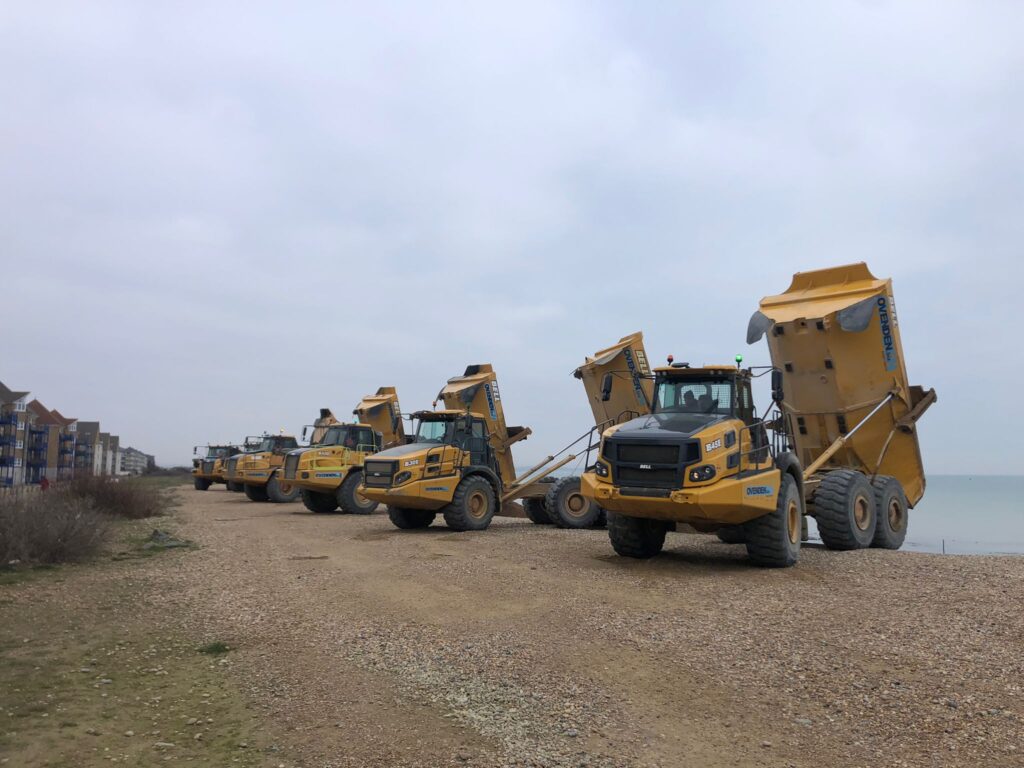
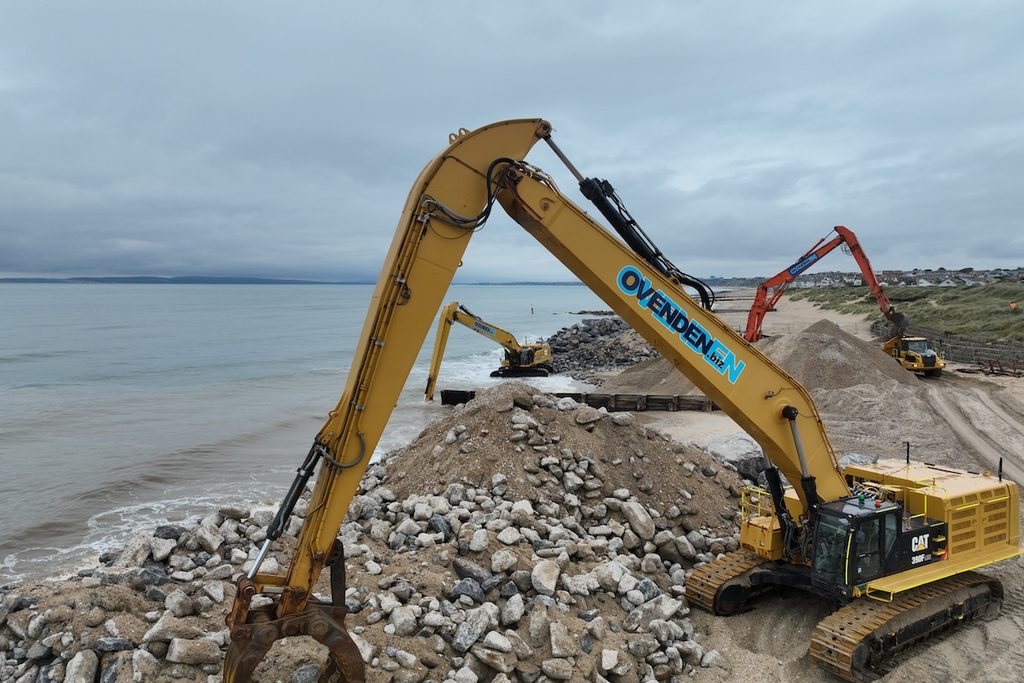
Incident beach work can involve moving substantial quantities of material within very restricted programmes. OEC’s coastal operations are supported by specialist equipment including low ground pressure bulldozers, articulated dump trucks and high-capacity excavators, together with experienced teams accustomed to working around tides and challenging coastal conditions. The business also maintains in-house engineering support and a high level of preparedness for emergency requirements.
Depending on the scheme, equipment may be used to:
- Recover displaced material
- Transport material along a frontage
- Rebuild beach crests
- Restore gradients
- Remove storm deposits
- Prepare access
- Support associated defence repairs
The methodology is determined by the client’s engineering requirements and the conditions encountered on site.
Protecting the environment while responding quickly
Coastal incidents can require urgent action, but beaches are also frequently environmentally sensitive working environments. Plant routes, material movements, ecological restrictions, access and working times therefore need to be considered as part of the response.
OEC’s existing approach to beach recycling includes defined plant corridors, controlled material management and coordination with coastal engineers, local authorities and environmental stakeholders. The objective is to combine the speed needed for effective incident response with the controls expected on sensitive coastal projects.
From storm damage to restored protection
Every storm and every coastline is different. The key to an effective response is understanding what has changed, establishing what protection needs to be reinstated and then deploying the people and equipment required to deliver the work safely within the available window.
For OEC, incident beach works sit naturally alongside decades of experience delivering beach recycling, beach nourishment and wider flood, coast and marine defence schemes across the UK.
Need support following coastal storm damage?
OEC provides specialist incident and emergency beach works, including beach reprofiling, shingle redistribution, beach recycling and associated coastal earthworks.
Talk to our Flood, Coast & Marine team about your requirements >