
Holding the line at Hengistbury Head
Project overview
At the rugged edge of Bournemouth, the sea is an architect of change.
Since 1939, a lone sea defence stood its ground against the English Channel waters, but after nearly a century of service, it was finally succumbing to the tide. Without intervention, coastal erosion threatened the future of 6,000 properties and the valuable habitats of the cliffside nature reserve near Hengistbury Head.
Our coastal engineering team was brought in to build a modern sea defence to hold the line against the elements and protect both local communities and the surrounding ecosystems for generations to come. Such was the scale and importance of the marine works that the project was even featured on BBC Countryfile.
Project overview
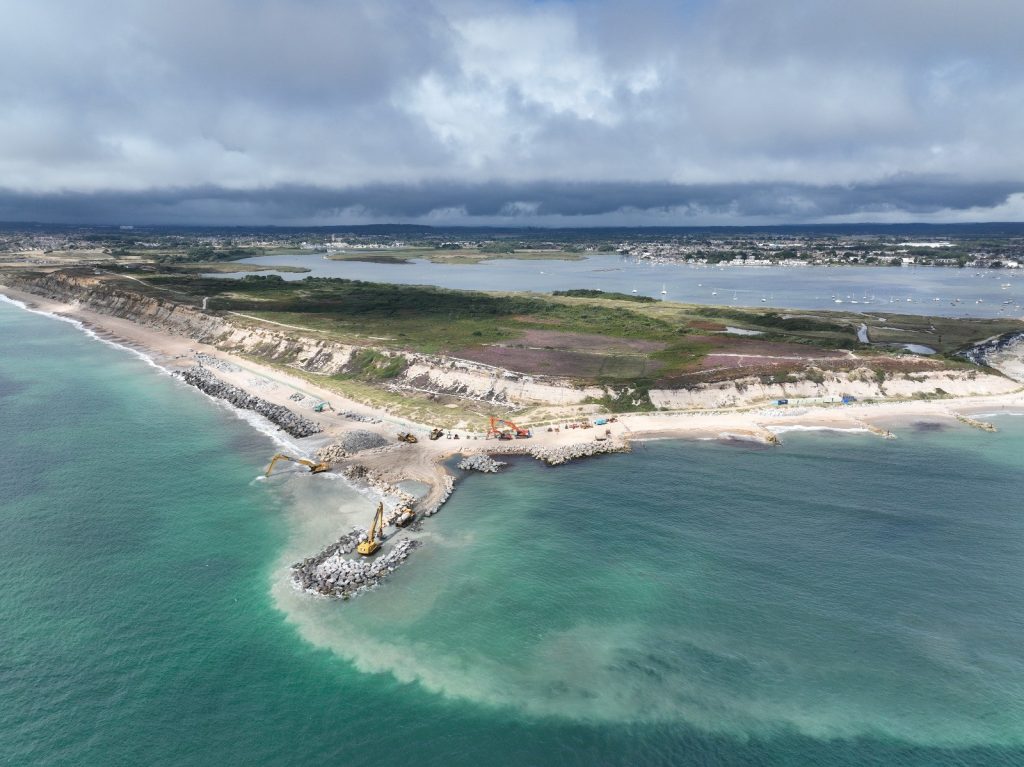
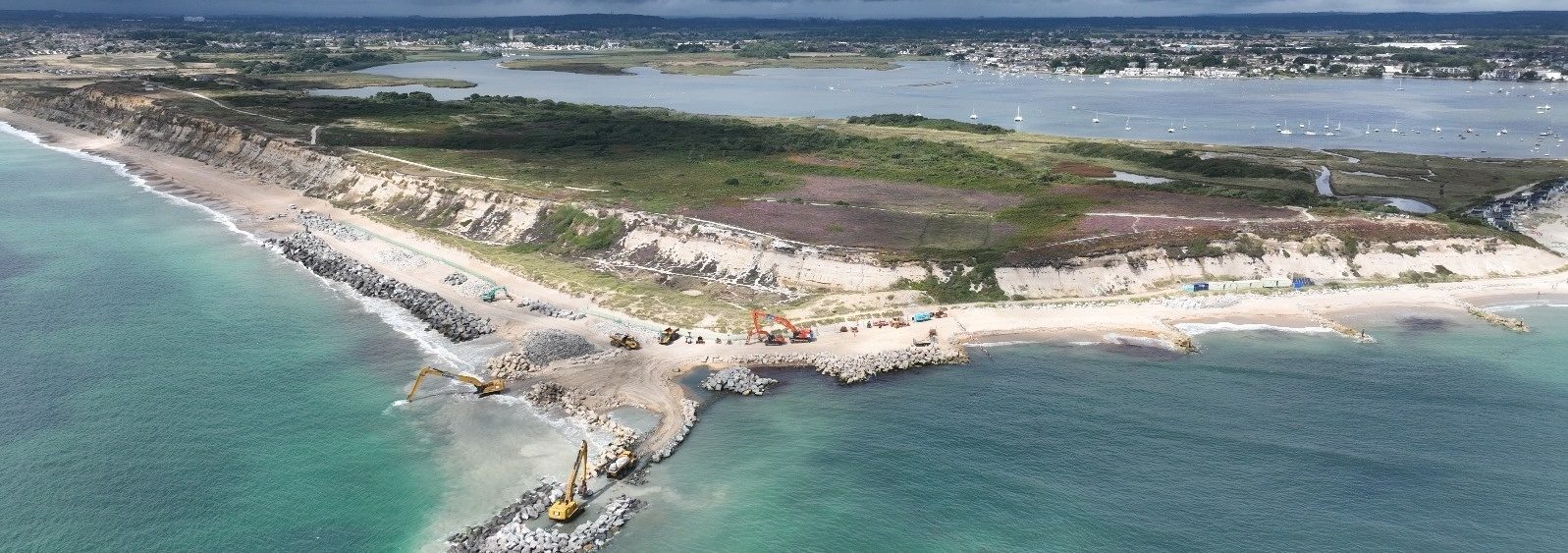
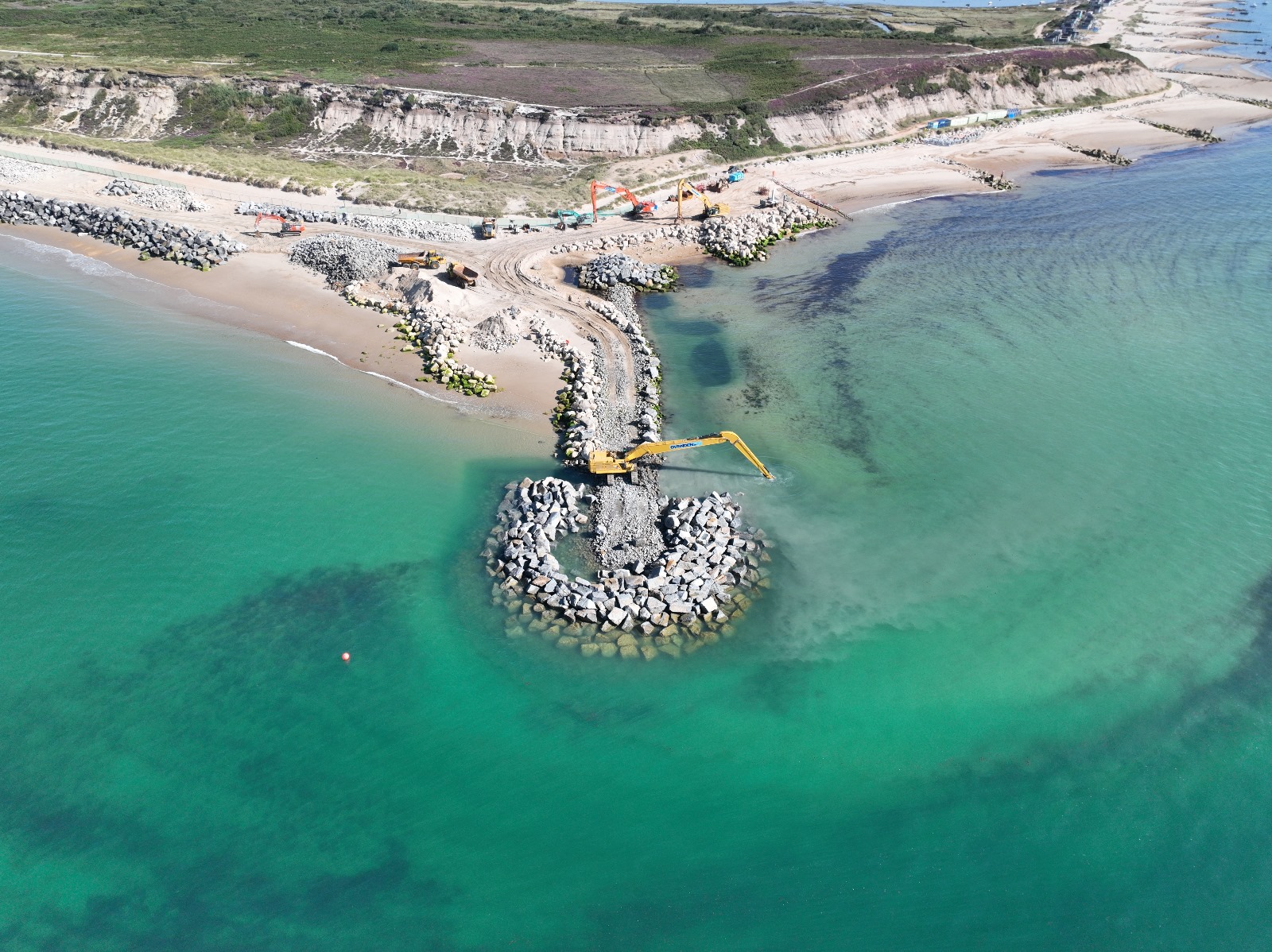
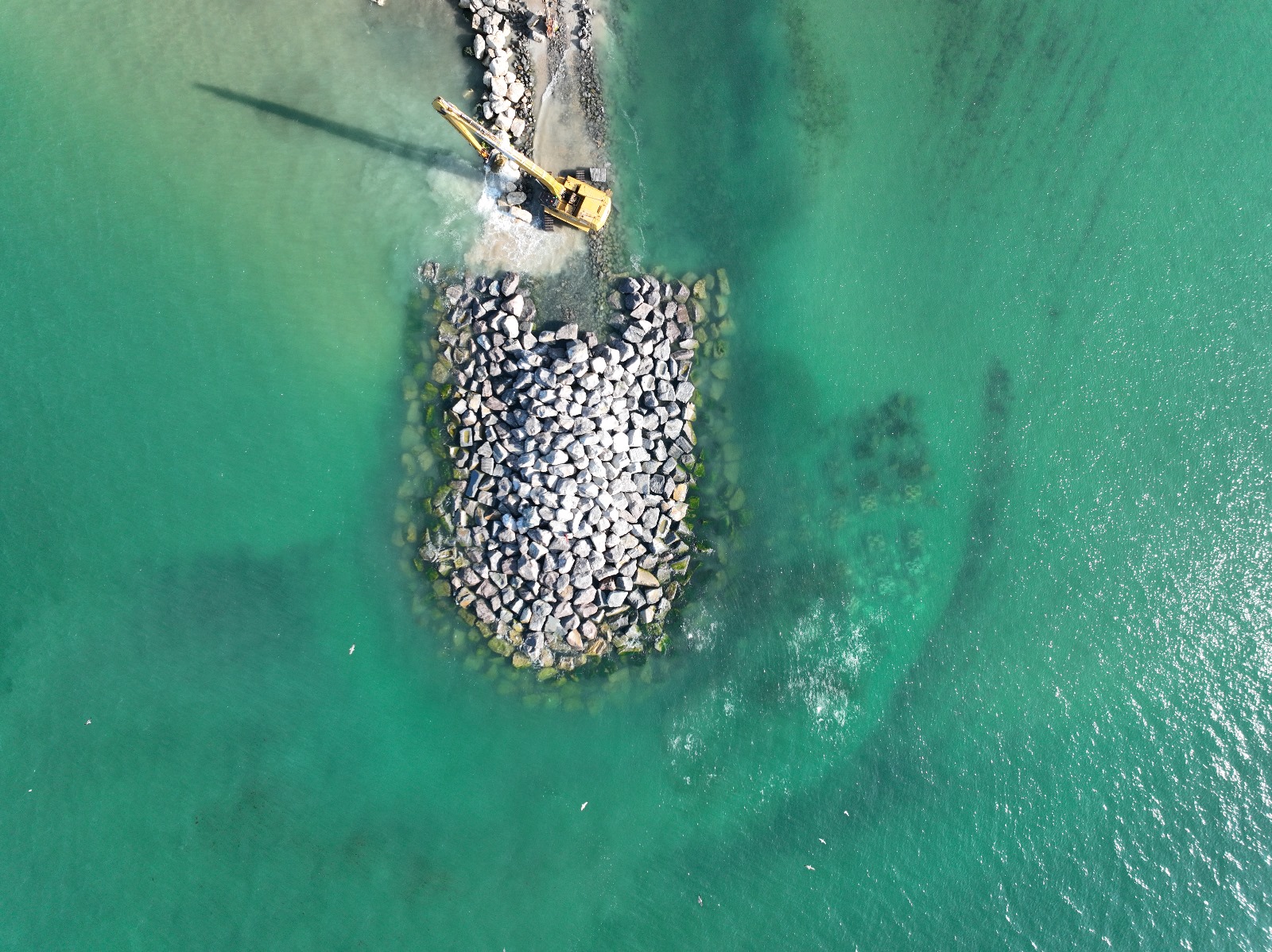
Located near Bournemouth, the project involved reconstructing the Hengistbury Head Long Groyne, an armoured breakwater extending from the end of Hengistbury Head into the English Channel. The upgraded structure stretches 150 metres from the beach, stands 1.5 metres higher than the previous groyne and reaches 30 metres at its widest point. It plays a critical role in controlling longshore drift, trapping sand that naturally moves along the coast and helping reduce erosion along the cliffs.
The full works
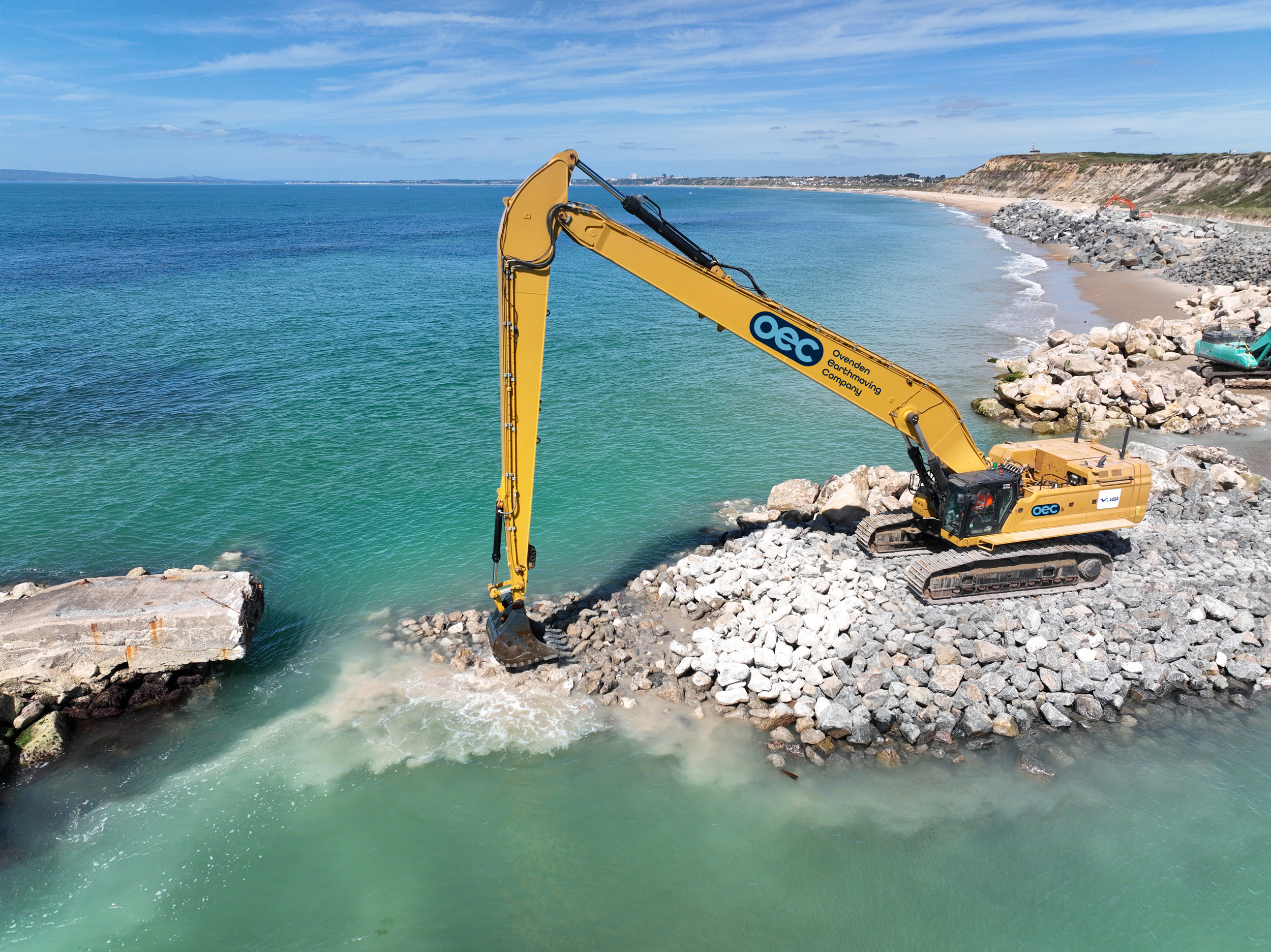
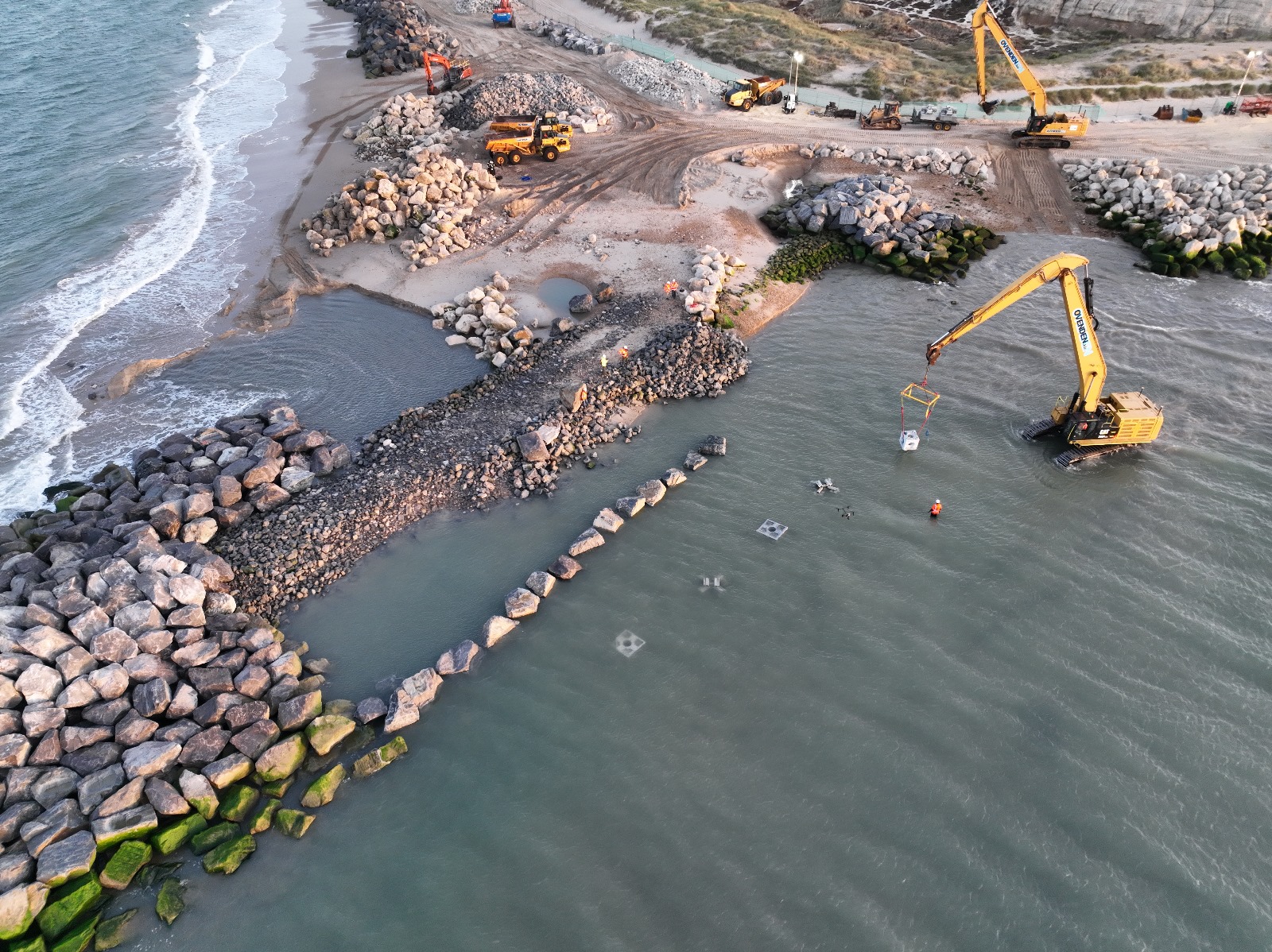
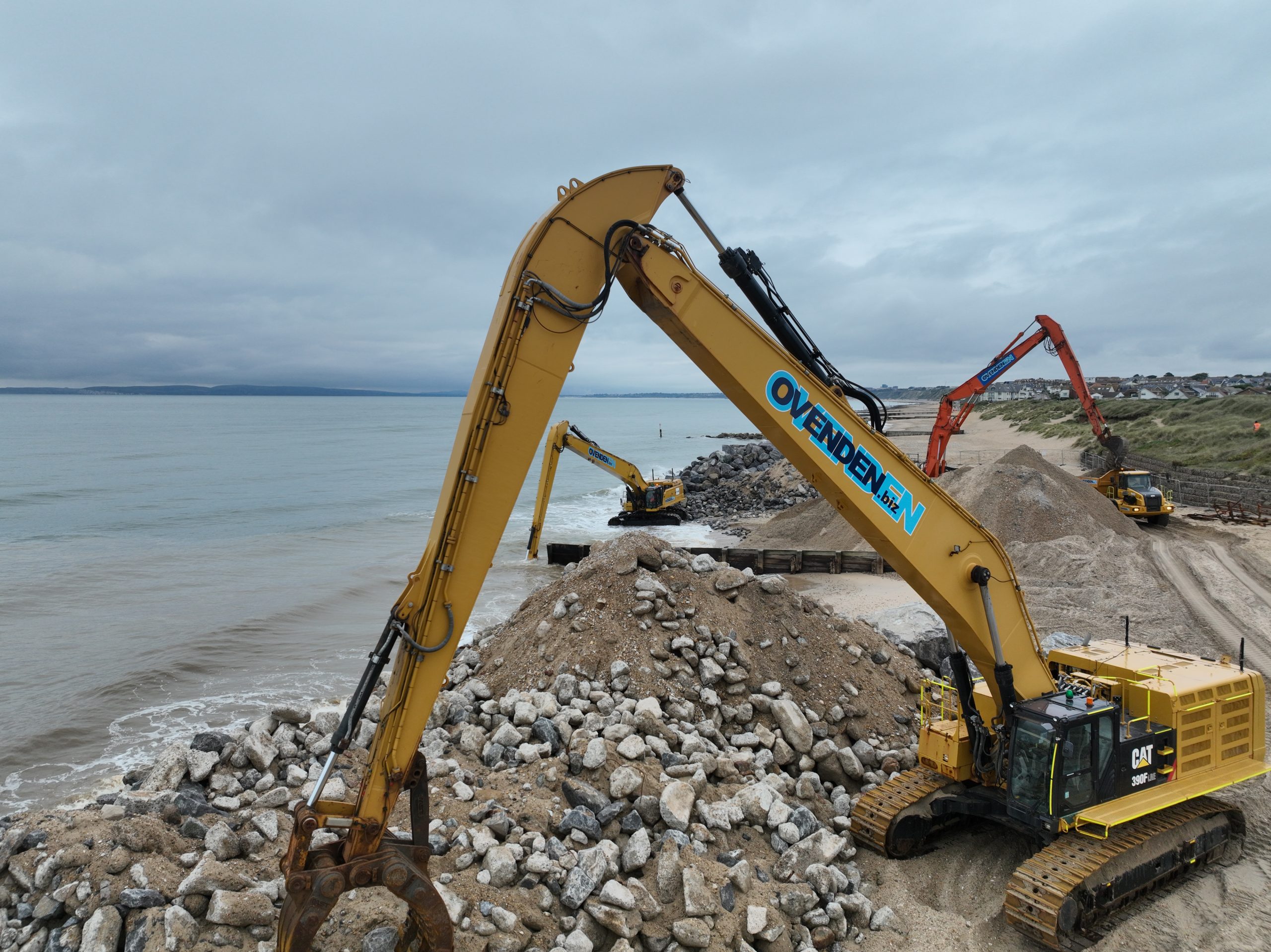
As experienced sea defence contractors, we carried out the complex underwater demolition works to dismantle the original concrete structure using specialist long-reach excavators and marine plant. We then crushed the recovered materials on site and broke them down to the right grading, so we could reuse them to build the core of the new coastal defence. This circular approach significantly reduced waste.
Due to their superior durability against extreme weather, nearly 30,000 tonnes of high-density granite were imported from France and Norway to build the new rock armour sea defence. Individual stones weighed up to 10 tonnes each and were carefully placed to create the engineered breakwater.
The Hengistbury Head scheme in numbers
- 34,800 tonnes – total rock handled during construction
- 30,000 tonnes – granite rock armour delivered by sea
- 8,000 tonnes – surplus rock reused to upgrade nearby groynes
- 6,000 properties – protected from long-term coastal erosion
The upgraded Hengistbury Head Long Groyne has been engineered to withstand rising sea levels and extreme weather conditions, helping safeguard homes, habitats and heritage along the Bournemouth coastline. This project showcases our ability to deliver complex coastal engineering projects sustainably and with proven results.
limited window to carry out works
Delivering sea defence works at the end of a narrow coastal headland required meticulous planning. Access to the site was limited, so all plant had to be assessed to ensure it could safely reach the breakwater. We cooperated with local authorities and police escorts to assess routes and turning points in advance. Working within a limited six-month window, the team carefully synchronised operations with tidal patterns and sea conditions to mitigate weather-related delays.
coastal engineering with wildlife at its heart
Hengistbury Head is part of a sensitive nature reserve home to more than 1,000 species. The works were designed to not only minimise ecological disruption but actively support biodiversity. Most rocks recovered from the original groyne were already colonised by marine organisms. Reusing them helped maintain existing ecosystems and accelerate natural recolonisation. The rock armour design also incorporated concrete blocks with textured surfaces, crevices and tidal pools to create sheltered spaces where marine species such as fish, crabs, limpets and sponges can thrive. Insects, birds and amphibians also benefit from these efforts to protect and enhance their habitats.
of surplus material reused
By recycling materials from the original groyne and using biodegradable hydraulic oil, we extended the life of valuable resources and minimised our environmental footprint. Around 8,000 tonnes of surplus materials were reused to upgrade two smaller groynes near Solent Beach, extending coastal protection further along the shoreline. With evidence of human activity stretching as far back as 12,500 years, the area also has significant archaeological importance. Strengthening sea defences helps preserve it so it can continue to be studied.
Related projects