
Reshaping the Medmerry coastline to work with nature
Project overview
At Medmerry on the Sussex coast, the sea had long been a threat rather than an asset.
One of the south coast’s most vulnerable flood zones, the area relied on a 3km shingle bank that was frequently breached. Maintaining it had become both costly and unsustainable.
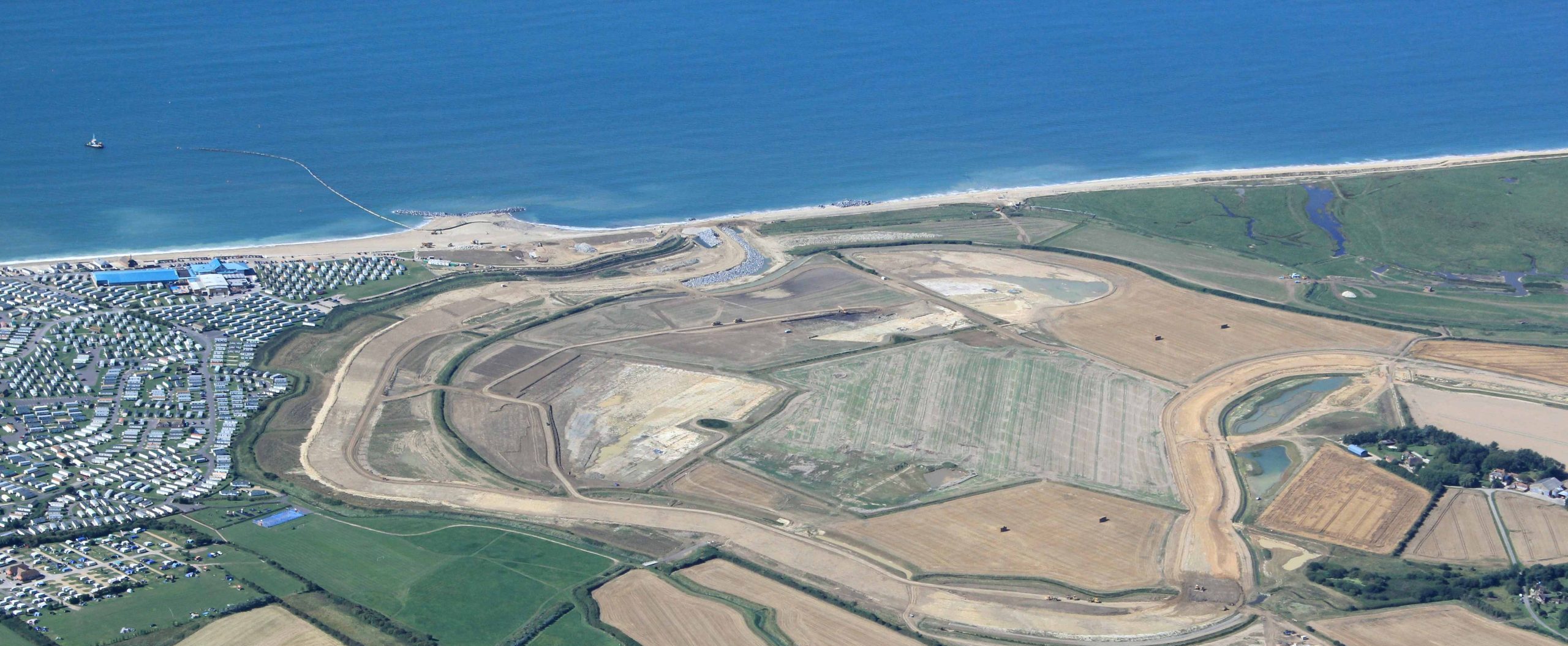
The solution was not to hold the line, but to move it. Medmerry became the UK’s most ambitious managed realignment scheme and one of the largest open-coast project of its kind in Europe. Designed to work with natural processes rather than against them, it set a new benchmark for sustainable coastal engineering. Working alongside Mackley (Team Van Oord), we played a key role in delivering a large-scale earthworks and coastal engineering programme that balanced flood protection with habitat creation.
Project overview
Completed as part of a scheme led by the Environment Agency alongside the RSPB, Medmerry provides a more sustainable approach to managing flood and erosion risk. By establishing a new inland line of defence and allowing controlled tidal inundation, the scheme delivers significantly improved protection while creating valuable new habitats.
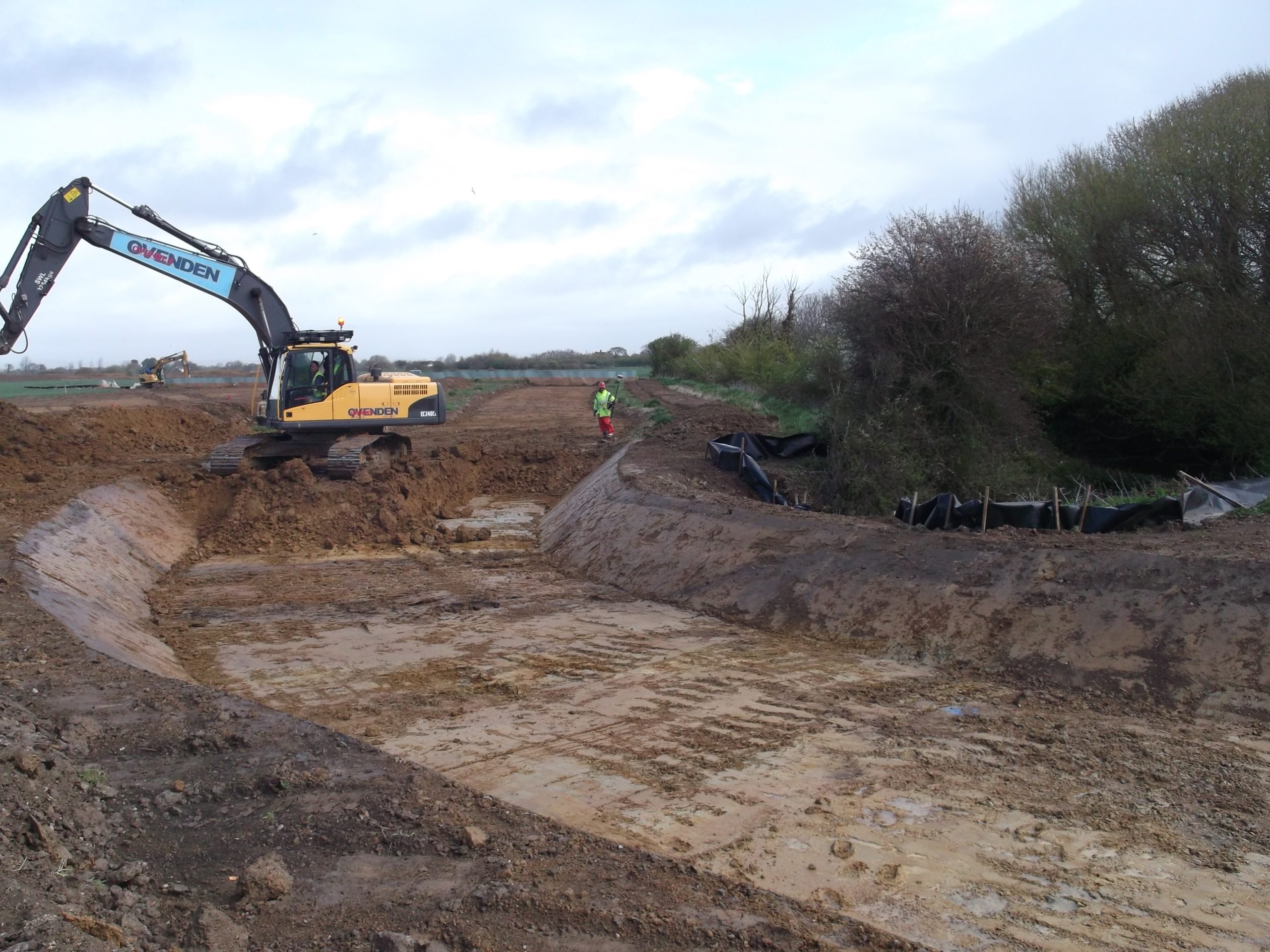
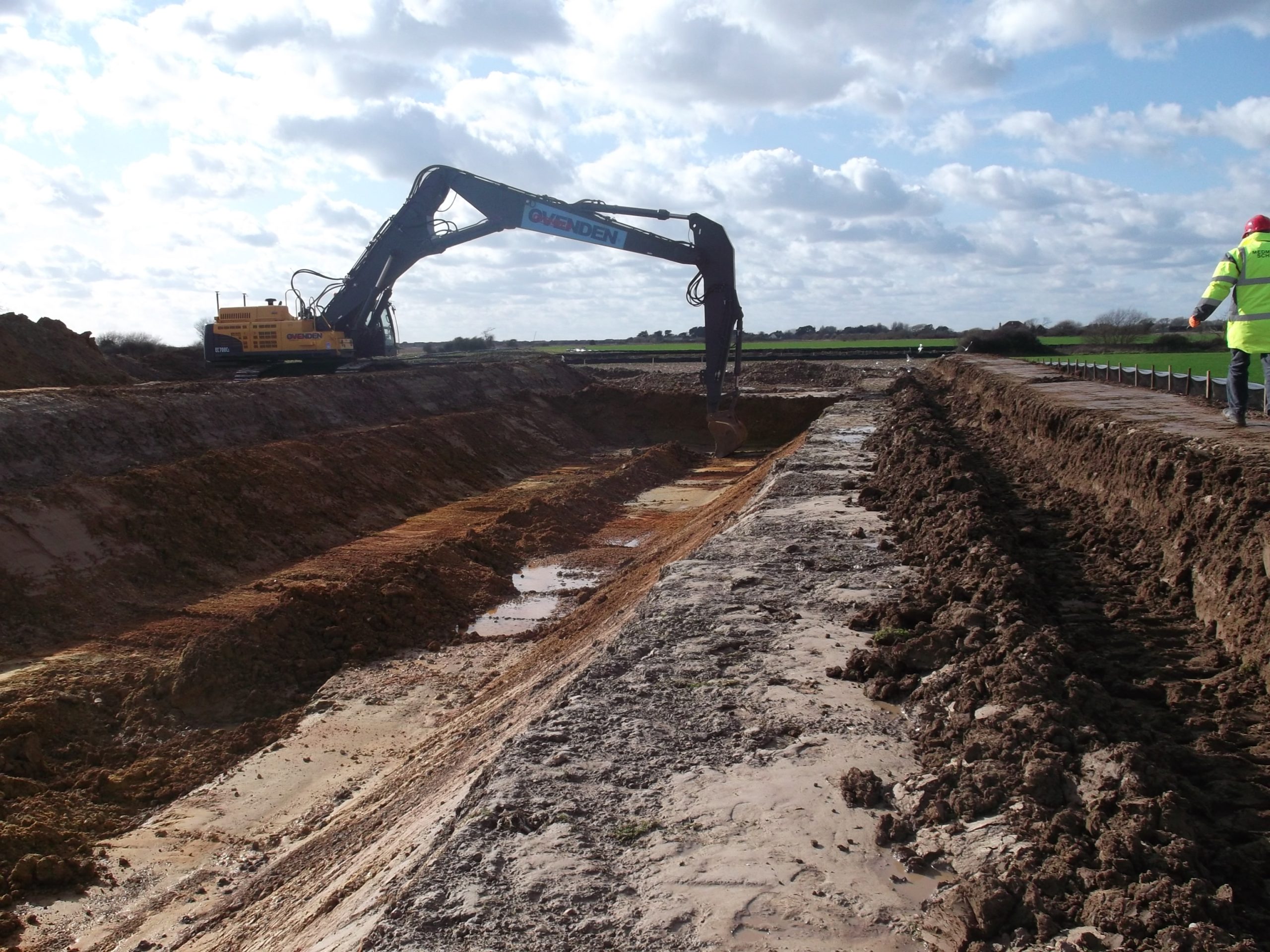
Delivered over 104 weeks, our involvement combined large-scale earthmoving services with environmental restoration. Works included the removal, storage and reuse of approximately 100,000m³ of topsoil, much of it under archaeological supervision, and the construction of a 300,000m³ earth-built flood defence bund. A further 100,000m³ of material was repurposed to form a new bird island habitat, supporting long-term land restoration and enhancing the surrounding environment.
The full works
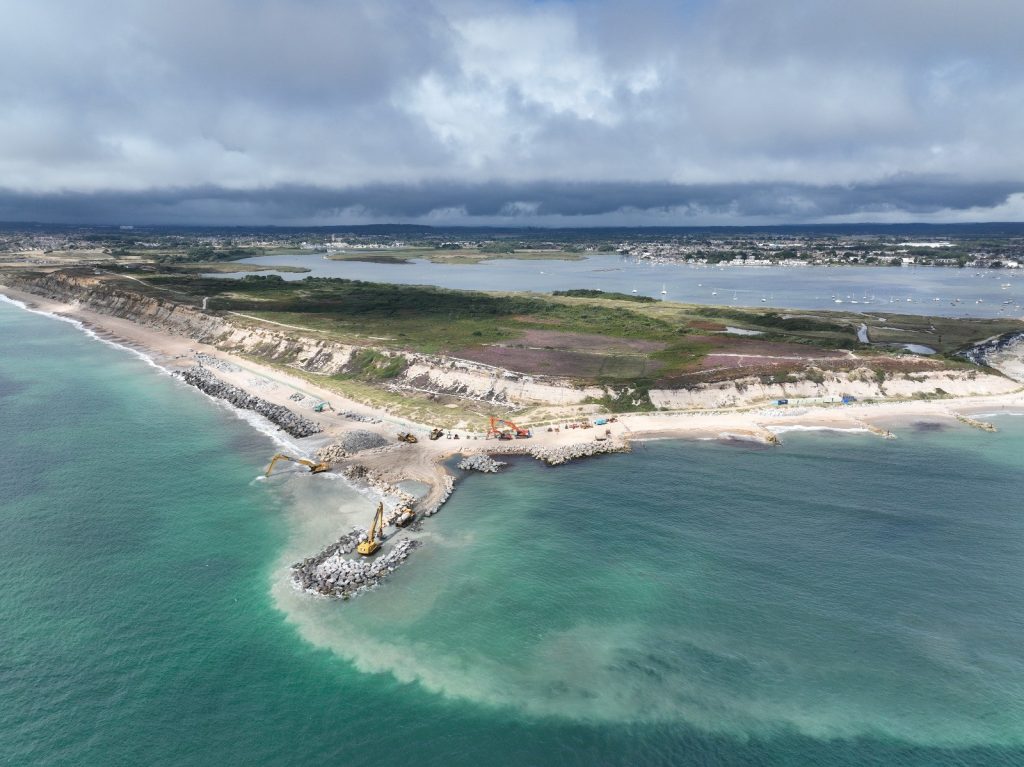
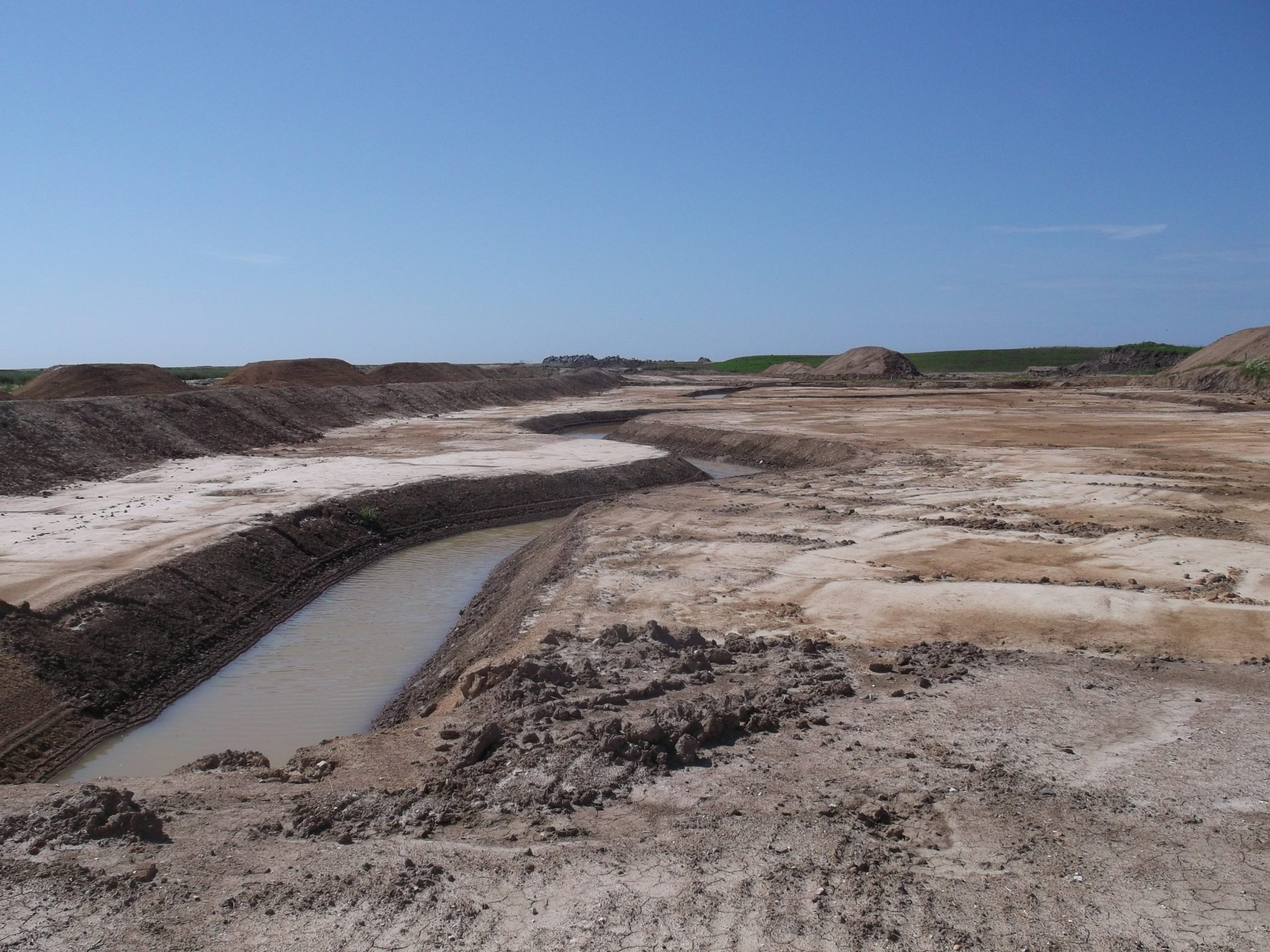
We carried out extensive excavation works using our specialist earthmoving machinery, sourcing suitable clay and gravel from on-site borrow pits to construct the new flood defence, wildlife ponds, salt marsh habitats, ditches and diversion channels. To reinforce the defence, we installed approximately 60,000 tonnes of 3–6 tonne rock armour and 30,000 tonnes of rip-rap stone ranging from 40kg to 2 tonnes.
All works were delivered using advanced machine-mounted and handheld survey systems, with real-time data enabling precise replication of as-built models.
One of the most significant moments came once the defence system was in place. The removal of 50,000m³ of the existing shingle beach frontage through controlled beach recycling and material movement, allowing the sea to flow into the new defence area and turning a long-established freshwater marsh into tidal salt marsh.
Project in numbers
- 100,000m³ – topsoil removed, stored and reused
- 300,000m³ – earthworks forming the flood defence bund
- 100,000m³ – material used to create new bird island habitat
- 60,000 tonnes – rock armour installed
- 30,000 tonnes – rip-rap stone placed
- 50,000m³ – shingle beach removed to create tidal flow
For us, it’s another example of delivering complex projects safely, sustainably and with lasting impact.

delivering specialist works
Construction took place during the wettest summer on record in 2012, with prolonged rainfall leaving large areas waterlogged and bringing progress close to a standstill at times. Ground conditions demanded careful sequencing and fast responses to changing site constraints. Despite this, our team maintained momentum, adjusting methodologies and working closely with project partners to meet key milestones. Close collaboration between the Environment Agency, Team Van Oord and the RSPB was critical to successful delivery.
of ecologically landscape created
This scheme goes beyond traditional flood defence. By creating over 180 hectares of new intertidal habitat and around 300 hectares of ecologically valuable landscape, the project compensates for habitat loss elsewhere along the south coast caused by coastal squeeze. Reintroducing tidal flow and establishing salt marsh habitats delivers long-term ecological benefits alongside flood protection. Newly formed environments now support biodiversity, contributing to a more resilient ecosystem.
of 3–6 tonne rock armour
The new sea defences at Medmerry now provide a higher standard of flood protection, safeguarding homes and infrastructure while reducing long-term maintenance costs. The scheme has also delivered significant environmental and economic benefits. This project demonstrates what can be achieved when engineering works with nature. Through large-scale earthmoving services, precise delivery and strong collaboration, we helped create a coastal defence that not only protects but enhances the landscape.
Related projects