


Beach recycling, beach reprofiling, beach recharge and beach nourishment are all widely used terms within coastal management.
They are also easy to confuse. Each involves managing sand, shingle or other beach material, and on some coastal schemes several techniques may be undertaken together.
There is, however, an important distinction between them:
- Beach recycling moves existing beach material from one location to another
- Beach reprofiling reshapes beach material to achieve the required profile
- Beach recharge introduces additional material to the beach
- Beach nourishment is commonly used as another term for beach recharge
The exact terminology can vary between schemes, but understanding these basic differences helps explain how managed beaches are maintained.
What is beach recycling?
Beach recycling involves recovering material from one part of a beach or coastal frontage and moving it to another area where it is needed.
Natural coastal processes continually redistribute sediment. This means shingle or sand can accumulate in one location while another part of the coastline becomes depleted.
Rather than allowing that imbalance to continue or automatically importing replacement material, the available sediment can be recycled.
OEC in action: Folkestone Harbour
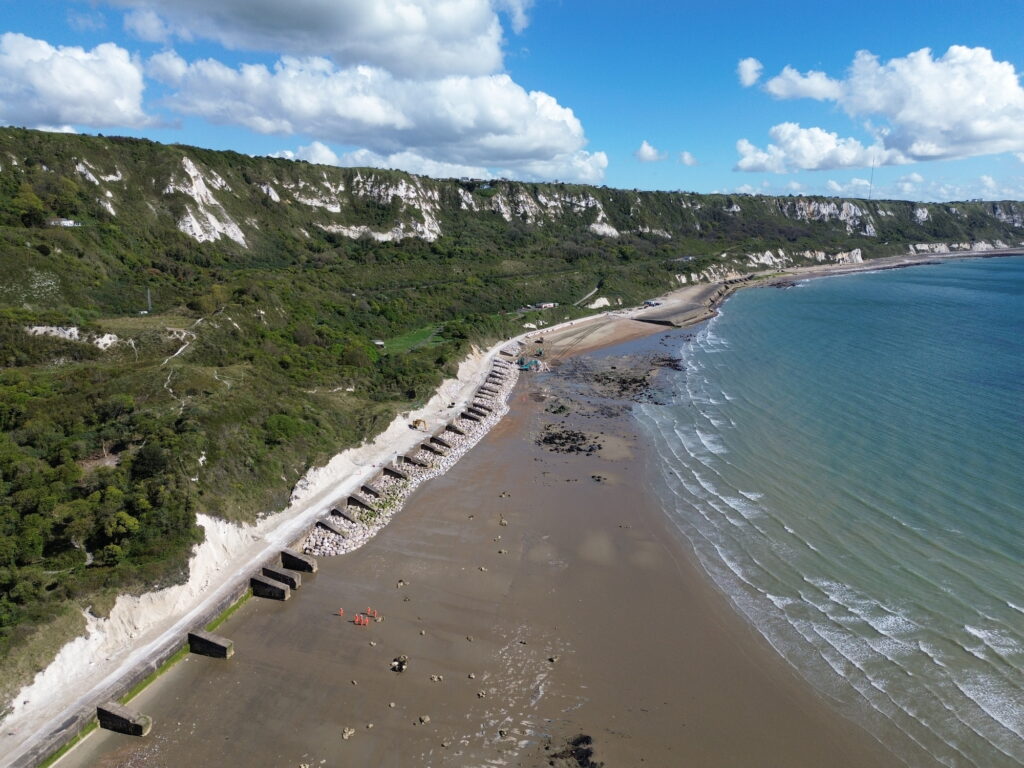
At Folkestone Harbour, OEC carried out beach recycling and dredging works, reusing material already on site rather than bringing in additional material.

A new chapter for Folkestone’s Harbour
Delivering coastal engineering works including dredging, beach recycling and land remediation while protecting the surrounding environment and minimising disruption.
The same broad principle is used on managed shingle beaches elsewhere in the UK.
Why recycle beach material?
Using material already available within the coastal system can offer several practical advantages. It can:
- Reinforce sections where beach volumes have fallen
- Make use of naturally accumulated material
- Reduce the quantity of new aggregate that needs to be brought to site
- Reduce associated transport requirements
- Maintain defined beach profiles
- Form part of regular beach management programmes
OEC’s beach recycling operations use controlled redistribution of shingle and coastal materials while seeking to minimise unnecessary material movement and reliance on imported aggregate.
What is beach reprofiling?
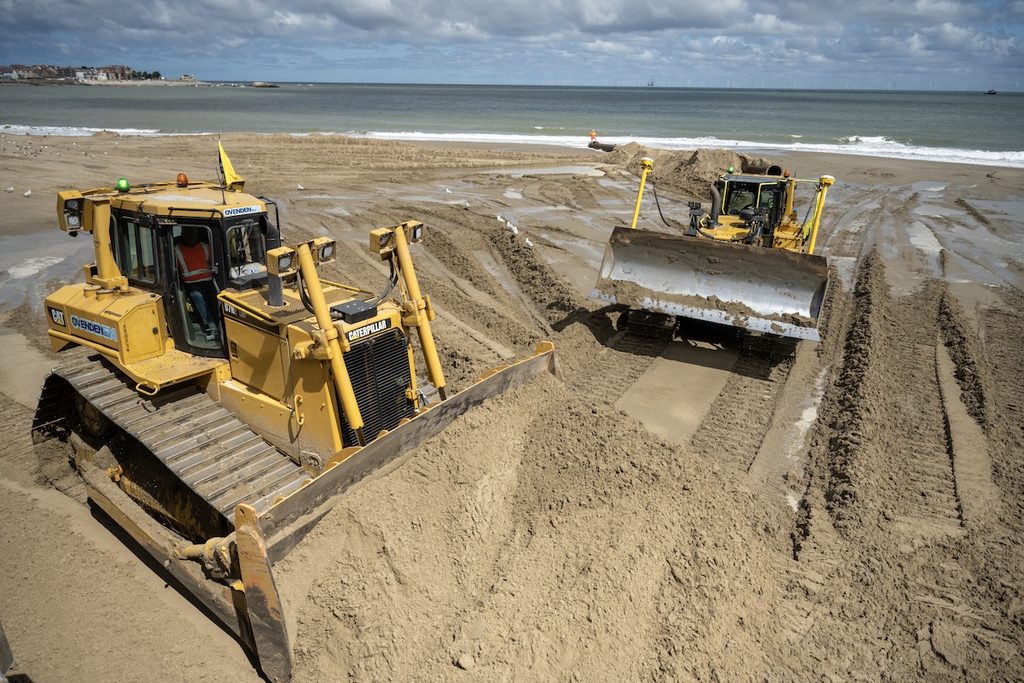
Reprofiling is about shape rather than source. Beach material is moved and graded to achieve a specified profile. This could include modifying:
- Crest height
- Beach slope
- Width
- Material distribution
- Levels immediately in front of a defence structure
Reprofiling and recycling frequently occur together. Material can be recycled from one part of the beach, transported to another and then reprofiled to create the required gradient and crest. This is why documents and project descriptions sometimes use phrases such as beach recycling and reprofiling together.
The Wash East coastal strategy, for example, describes beach recycling as reprofiling sand or shingle already present on the beach, while distinguishing this from recharge using material brought in from elsewhere.
What is beach recharge?
Beach recharge is different because additional material is introduced into the beach system. Suitable sand, shingle or aggregate is sourced elsewhere and transported or delivered to the frontage.
Government flood and coastal erosion risk management guidance states that beach nourishment, also referred to as beach recharge, involves placing a significant volume of suitable material onto a beach system in order to sustain the standard of protection provided by a coastal asset.
Recharge might be required where natural sediment supply and material already available on the beach are insufficient to create or maintain the required profile.
Is beach nourishment different from recharge?
In UK coastal management, beach nourishment and beach recharge are frequently used interchangeably. Both broadly describe adding suitable material to a beach.
“Nourishment” is particularly common in engineering and coastal management literature, while “recharge” is also widely used within UK schemes and public-sector documentation.
For example, the Environment Agency‘s coastal defence research describes beach nourishment approaches, including the use and placement of recharge material.
The terminology used on an individual project may therefore depend on the client, designer or beach management plan.
What is shingle redistribution?
Shingle redistribution is closely related to beach recycling. It describes physically moving shingle that is already available along a coastal frontage to locations where it is required.
On a managed beach, natural movement can result in excess material accumulating at one end or in particular sections. Redistribution helps rebalance the frontage.
Where the work involves transporting material significant distances along the beach, it may be described as recycling. Where it involves more localised movement, redistribution or reprofiling may be the preferred terminology.
Which technique should be used?
There is no single answer. The appropriate intervention is determined by factors including:
- Coastal engineering requirements
- Beach condition
- Available sediment
- Required profile
- Environmental constraints
- Tides
- Access
- Transport requirements
- Programme
- Longer-term coastal management strategy
The designer or responsible coastal authority determines what the frontage needs to achieve. The specialist contractor then develops the practical methodology required to deliver it.
Can recycling and recharge be combined?
Yes. A scheme can make the greatest possible use of available beach material through recycling and reprofiling, while also importing additional material where a shortfall remains. The techniques therefore complement rather than necessarily compete with one another.
What role do these techniques play after storms?
Storm events can rapidly redistribute material and change beach levels. Where sufficient sediment remains available, emergency beach recycling and reprofiling may be used to restore the required beach shape. If too much material has been lost from the managed frontage, recharge may also become necessary.
Delivering beach management at scale
Whichever technique is required, successful delivery is fundamentally an earthmoving operation undertaken within an unusually dynamic environment. Large quantities of material may need to be recovered, transported, placed and shaped within tidal and programme constraints.
OEC has undertaken beach nourishment and wider coastal defence works since its first beach nourishment contract at Sandwich Bay in 1997 and now operates nationally across flood, coast and marine defence projects. Specialist plant, experienced coastal operators and carefully planned material movements allow these engineered beach designs to be translated into practical delivery.
Planning beach recycling, reprofiling or recharge works?
OEC delivers specialist beach and coastal earthmoving projects throughout the UK.
Talk to our Flood, Coast & Marine team about your requirements >
Whether you need rapid support following storm damage, preventative beach works ahead of severe weather or a planned coastal management programme, our team brings the specialist plant, experience and practical capability needed to respond safely and efficiently.
