

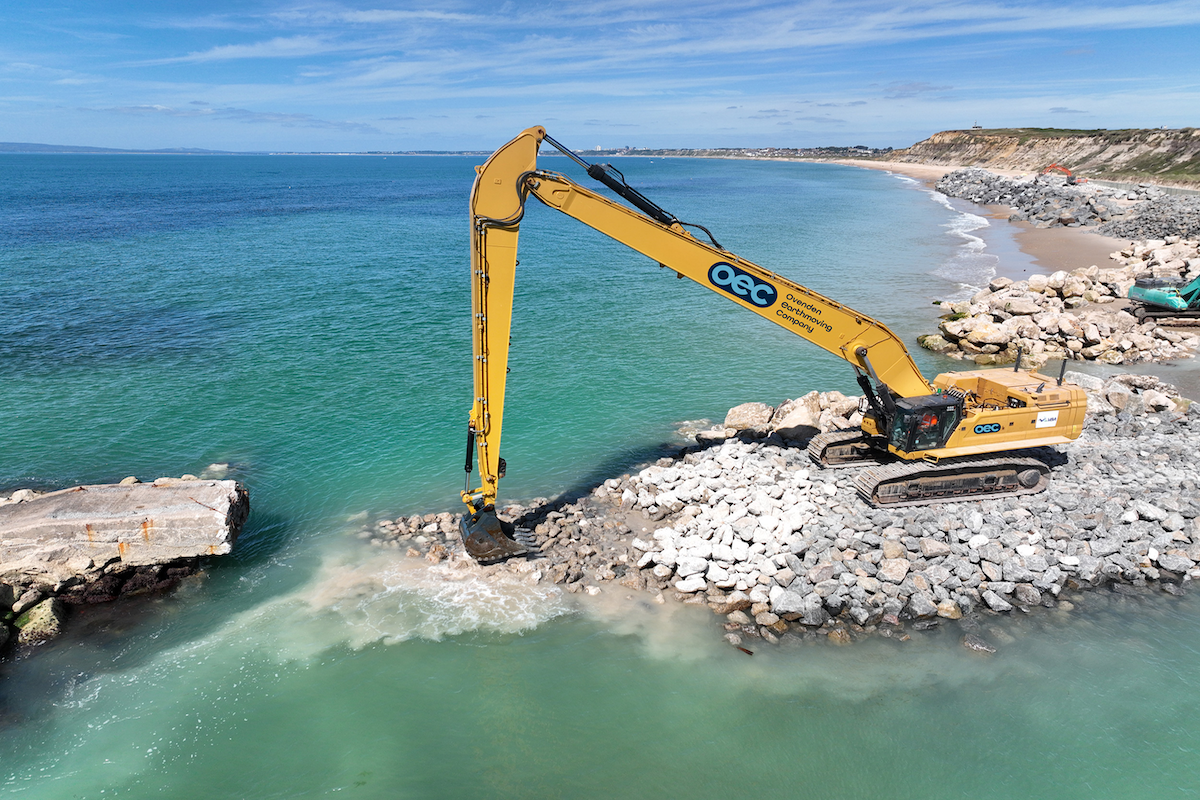
Coastal incident work is often associated with what happens after a major storm. But coastal management can also be proactive.
Where forecasts, beach monitoring or existing conditions identify a vulnerable frontage, there may be an opportunity to undertake works before more severe weather arrives.
That might mean redistributing shingle, restoring beach profiles, increasing crest levels in accordance with an engineering design or simply ensuring the people and equipment needed for an emergency response are prepared.
The objective is not to prevent severe weather. It is to ensure the coastal defence system is in the best practical condition to face it.
Why the condition of the beach matters
On many coastlines the beach is not simply an amenity. It forms part of the flood and coastal erosion defence system. Managed shingle and sand beaches can provide an important first line of defence between waves and the communities, infrastructure or structures behind them.
At Seaford, the Environment Agency describes the beach as a soft-engineered flood defence which reduces the impact of high tides and storms, with regular beach recycling undertaken to maintain its performance.
Where profiles or beach volumes have reduced before a significant weather event, coastal managers may therefore consider intervention.
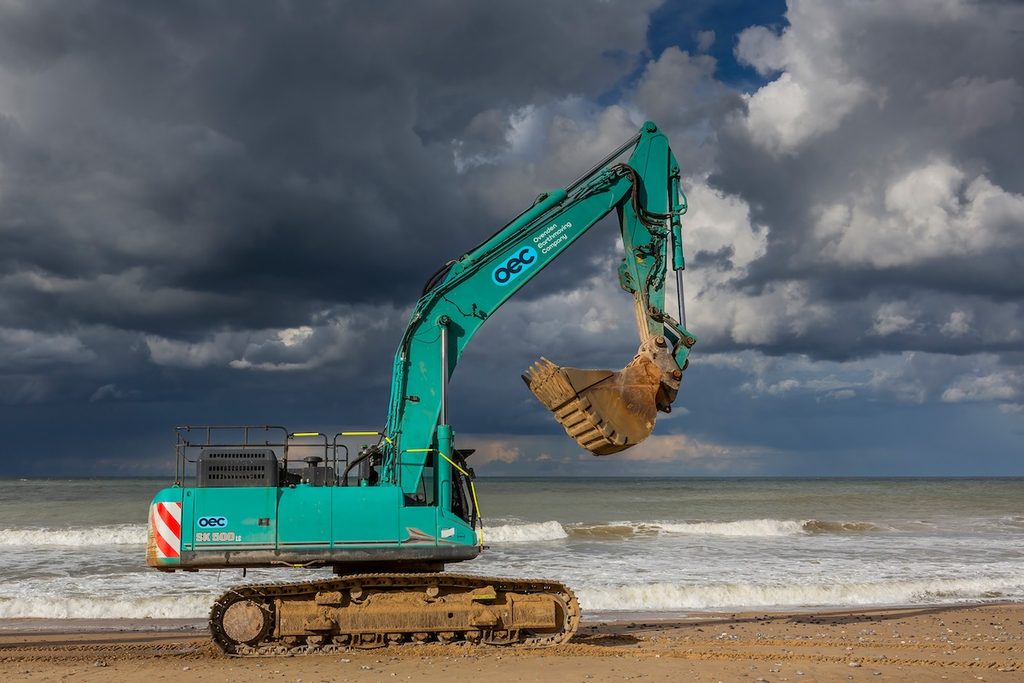
Monitoring can identify changing conditions
Beaches change continuously. This means effective beach management is often based on monitoring rather than simply reacting to visible damage. Surveys can identify changes in:
- Beach levels
- Crest elevations
- Sediment volumes
- Beach width
- Slopes and profiles
- Areas of erosion
- Material accumulation
Those observations can be considered alongside weather forecasts, tidal predictions and the engineering requirements for the frontage. The decision about whether intervention is required rests with the relevant coastal management and engineering teams.
What preventative beach works can involve
The exact response depends on the scheme, but pre-storm beach works may include several different activities.
Beach reprofiling
Existing material can be reshaped so the beach meets the profile required by the coastal engineering design.
Shingle redistribution
Material that has naturally accumulated in less critical areas can be moved towards vulnerable sections.
Larger-scale recycling can move existing sand or shingle along the coastline to restore volume where it is needed.
Additional suitable material can be introduced where the beach does not contain enough sediment to achieve the required protection.
Localised coastal defence work
Access, drainage, rock, revetments or other associated assets may also need maintenance where these form part of the overall system. The specific intervention must always reflect the engineered coastal management strategy for that location.
Why beach crest levels can be important
On managed shingle beaches, the height and form of the ridge can be an important component of flood protection. The Environment Agency‘s work in Norfolk, for example, redistributes sand and shingle specifically to restore the protective shingle ridge.
This is why simply having a large volume of material somewhere on the frontage is not necessarily sufficient. The material needs to be located and shaped in accordance with the requirements of the coastal defence scheme.
Planning around tides
Even when a weather event has been forecast several days ahead, the practical working opportunity can be substantially shorter. Coastal plant operations have to account for tidal cycles, access and ground conditions.
Sections of beach that are accessible at one point in the day may become unavailable as the tide rises. The programme may therefore need to be built around specific tidal windows rather than conventional working hours.
OEC’s coastal teams regularly undertake operations within these restrictions and its existing beach recycling methodology is specifically planned around tidal access constraints.
Having the right machinery available
Preventative or incident beach works can involve moving substantial volumes within a short programme. The ability to mobilise the right combination of machines is consequently important.
OEC’s specialist coastal fleet includes low ground pressure bulldozers, articulated dump trucks and high-capacity excavators, supported by in-house engineering teams and maintenance capability. OEC specifically identifies high preparedness and mobilisation capability for emergency requirements as part of its national coastal service.
The plant configuration can then be matched to factors including:
- Material quantity
- Required haul distances
- Beach conditions
- Access
- Tidal limits
- Required profiles
- Programme
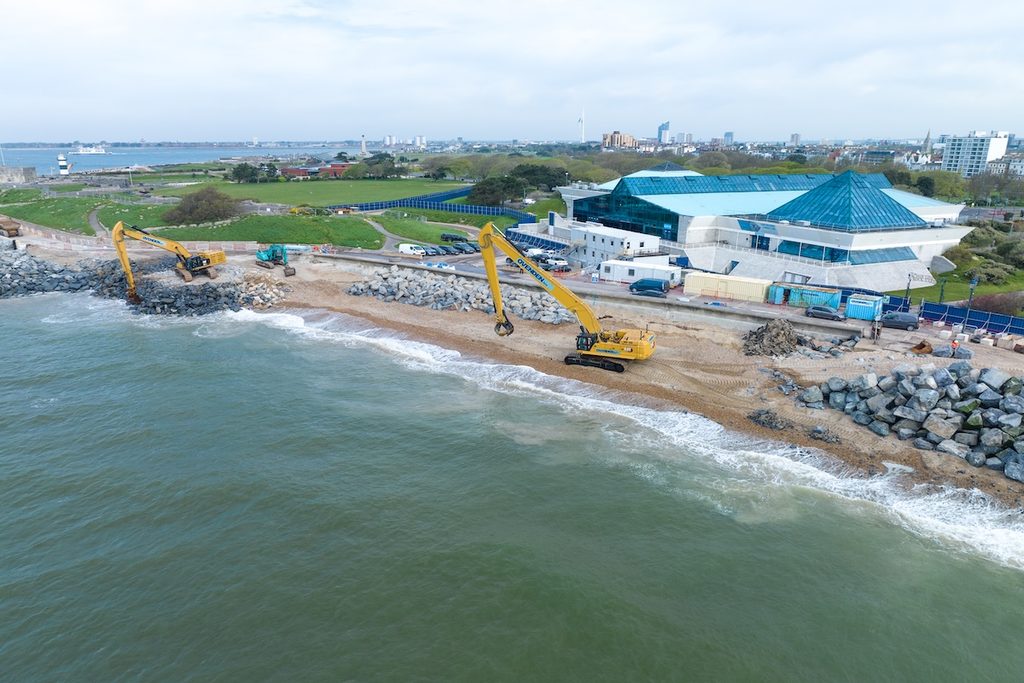
Preparing for an incident response
Sometimes the most appropriate action ahead of severe weather is not immediate earthmoving.
It can be ensuring that an effective response is ready if the predicted event causes damage. Preparedness might include:
- Reviewing site access
- Identifying potential plant requirements
- Understanding tidal windows
- Establishing mobilisation routes
- Reviewing available beach material
- Agreeing communication channels
- Identifying environmental constraints
- Coordinating with engineering and client teams
This can significantly reduce uncertainty if intervention becomes necessary.
What happens if the storm damages the beach anyway?
Preventative beach management cannot remove coastal risk. Major weather events can still move significant quantities of material or damage defence assets.
When this occurs, the response shifts from preparation to incident beach works.
Emergency reprofiling, beach recycling or redistribution can then be undertaken against the updated requirements of the affected frontage.
Planned maintenance and emergency response should work together
The most resilient approach to beach management is not simply waiting until something goes wrong.
Routine monitoring and planned recycling or nourishment help maintain the defence, while emergency capability provides a response when weather creates unexpected or accelerated change. At several managed UK beaches, annual or twice-yearly recycling programmes form part of ongoing coastal defence maintenance.
Incident works sit alongside that planned management.
The two should be viewed as parts of the same wider objective: maintaining an effective coastal defence system as conditions change.
Specialist delivery in dynamic environments
Preparing a beach for severe weather requires more than machinery. It requires an understanding of how to deliver efficiently when the programme is dictated by tides, weather, access, environmental conditions and engineering requirements.
OEC has delivered flood, coast and marine defence infrastructure for nearly three decades, with experience ranging from beach nourishment and recycling through to rock structures and major marine earthmoving projects.
That combination of specialist people, plant and practical coastal experience provides clients with additional delivery capability when conditions become time-critical.
Preparing for severe coastal weather?
OEC supports planned, preventative and emergency beach works across the UK, including reprofiling, beach recycling, shingle redistribution and wider coastal earthmoving.
Talk to our Flood, Coast & Marine team about your requirements >
