

Adapting as conditions change: River Roding major earthworks and site reinstatement
Project overview
Large-scale earthworks are a true test of engineering grit, requiring careful planning, efficient resource management and the flexibility to respond when site conditions change.
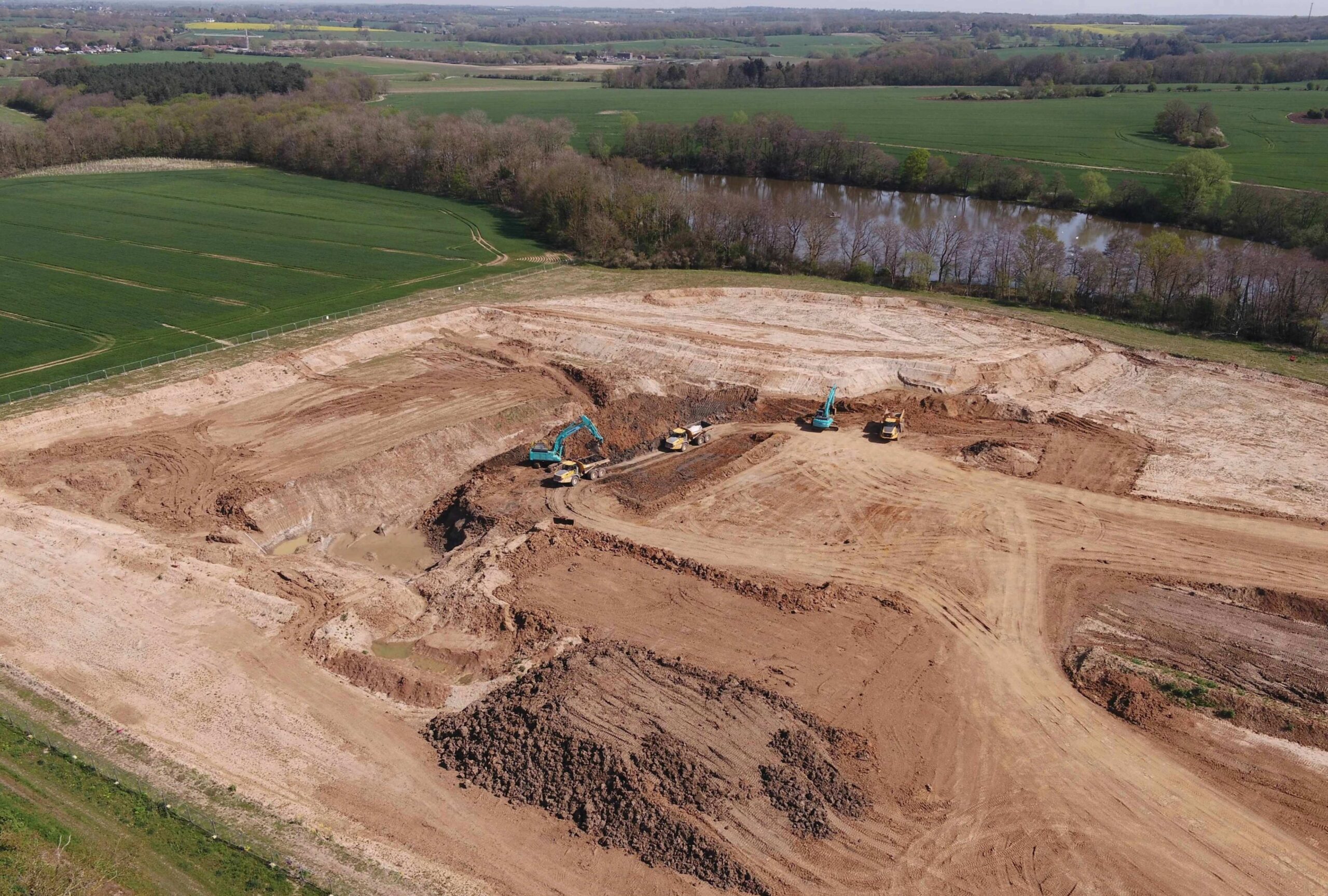
At the heart of the River Roding scheme was an extraordinary 250,000m³+ (over a quarter of a million cubic metres) of earth carefully orchestrated across the landscape. The scheme required significant excavation, movement, placement and reinstatement works, alongside the construction of a river embankment and the deployment and lifecycle management of temporary haul roads.
While the initial scope was planned as a single-visit operation, we had to reshape our strategy due to changes to the main contractor’s programme, piling works and challenging weather conditions, returning a second time to complete the main earthworks and final reinstatement.
Project overview
Our involvement included stripping and reinstating topsoil, excavating clay and subsoil, constructing embankments using excavated materials and reinstating the borrow pit. The works were delivered using materials sourced entirely on site, with no imported materials required, helping to minimise vehicle movements and the environmental impact of the works. Beyond this, we also delivered temporary haul roads, embankment turf reinforcement and drainage matting. The project required careful coordination with the wider construction programme, particularly as our earthworks schedule depended on the progress of other site activities.
The full works
For a project of this magnitude, our team delivered the major earthmoving operations, managing the excavation, movement and reuse of materials while maintaining safe and efficient site operations. The works comprised:
- Topsoil stripping
- Excavation of clay and subsoil
- Embankment construction using excavated clay
- Borrow pit backfill
- Topsoil reinstatement to borrow pit
- Topsoil placement on embankment
- Embankment turf reinforcement and drainage matting
- Construction, maintenance and removal of temporary haul roads
To deliver the works, we mobilised two dozers, four dump trucks ranging from 30 to 45 tonnes, two excavators ranging from 20 to 50 tonnes, one roller as well as one tractor and bowser for dust suppression and dewatering. This arsenal of specialist fleet was operated by an experienced team that included a supervisor, between five and eight machine operators, and one to three labourers as required.
River Roding project in numbers
- 30,000m³ of topsoil stripped
- 95,000m³ of clay and subsoil excavated
- 30,000m³ of excavated clay used to construct the embankment
- 65,000m³ of backfill used to reinstate the borrow pit
- 10,000m³ of topsoil reinstated to the borrow pit
- 20,000m³ of topsoil placed on the embankment
- 6,500m² of turf reinforcement and drainage matting installed
- 5,000m² of temporary haul roads constructed, maintained and removed
Overcoming engineering and environmental challenges
The path to completion was defined by environmental stewardship and overcoming compounding operational challenges
Right from the outset, nature dictated the timeline. Nesting birds established active habitats across the footprint, requiring immediate, thorough ecological management and protective measures before a single track could turn.
Then came the British weather. Persistent heavy rainfall began saturating the ground just as site delays elsewhere we had to revise the programme. A value engineering proposal by the main contractor involved using cut-off piles within the cofferdam to allow construction of the main concrete structure to progress. However, the piling works overran and, when the piles were subsequently extracted, they proved more difficult to remove than anticipated. This caused further delays and pushed our earthworks into the winter period.
Adapting to a changing programme
Rather than allowing these changes to compromise delivery, we worked with the wider project team to adapt our programme and decided to return to site in March 2026 to complete the main earthworks, following the initial season of works between July and November 2025. Then, a further month-long project hiatus was needed for the main contractor to finalise the main concrete structure. We remained flexible, deploying back into action in mid-September 2026 for the final works.
Delivering the complete earthworks package
The River Roding project stands as a benchmark for how we handle large-scale earthworks, proving that high-volume material handling, environmental protection and shifting programmes can coexist smoothly when managed with expertise. By combining experienced operators, a flexible specialist fleet and practical planning, we transformed dynamic site challenges into a fully reinstated, structurally sound landscape delivered across two successful construction seasons.
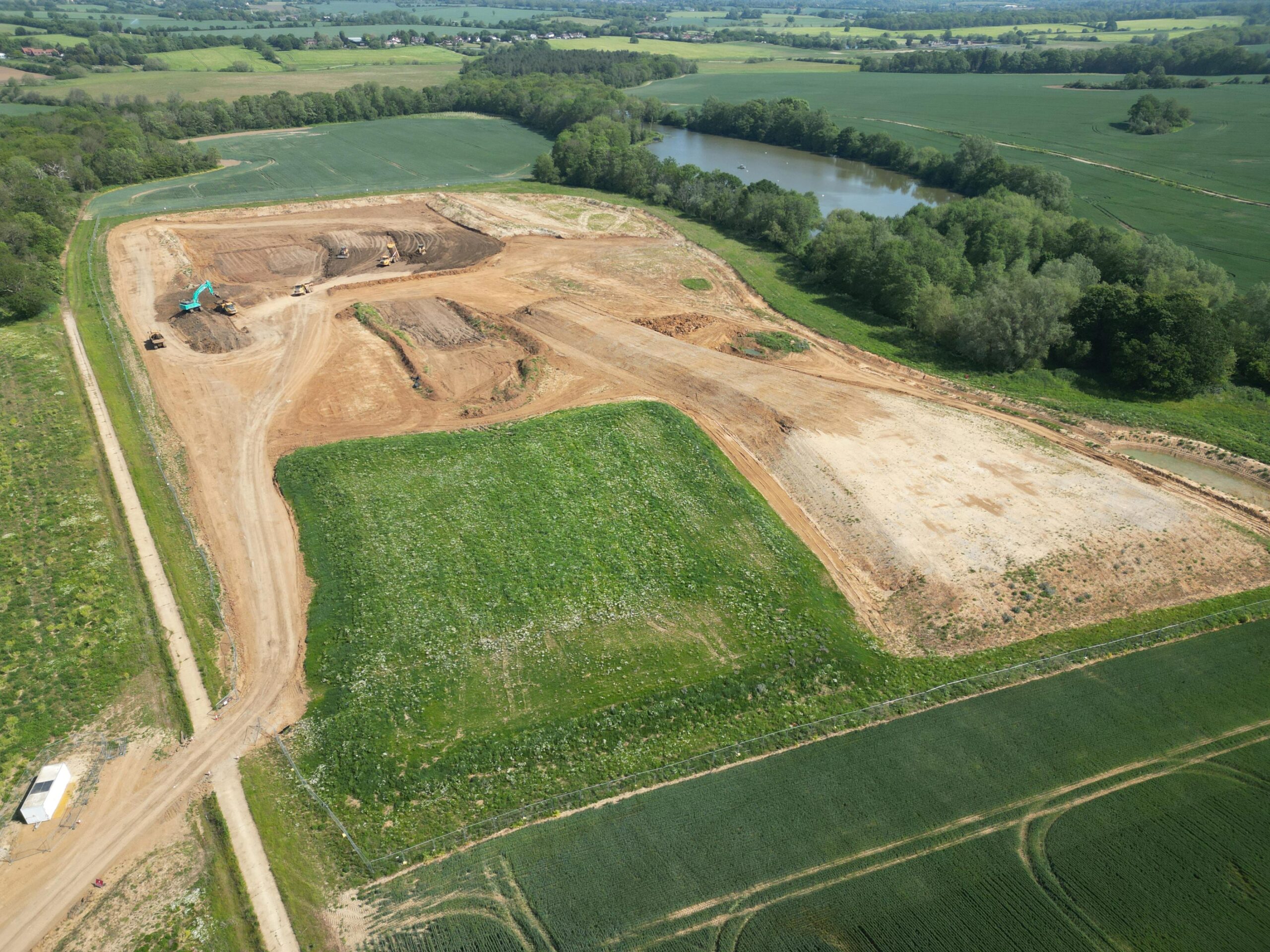
of clay and subsoil excavated
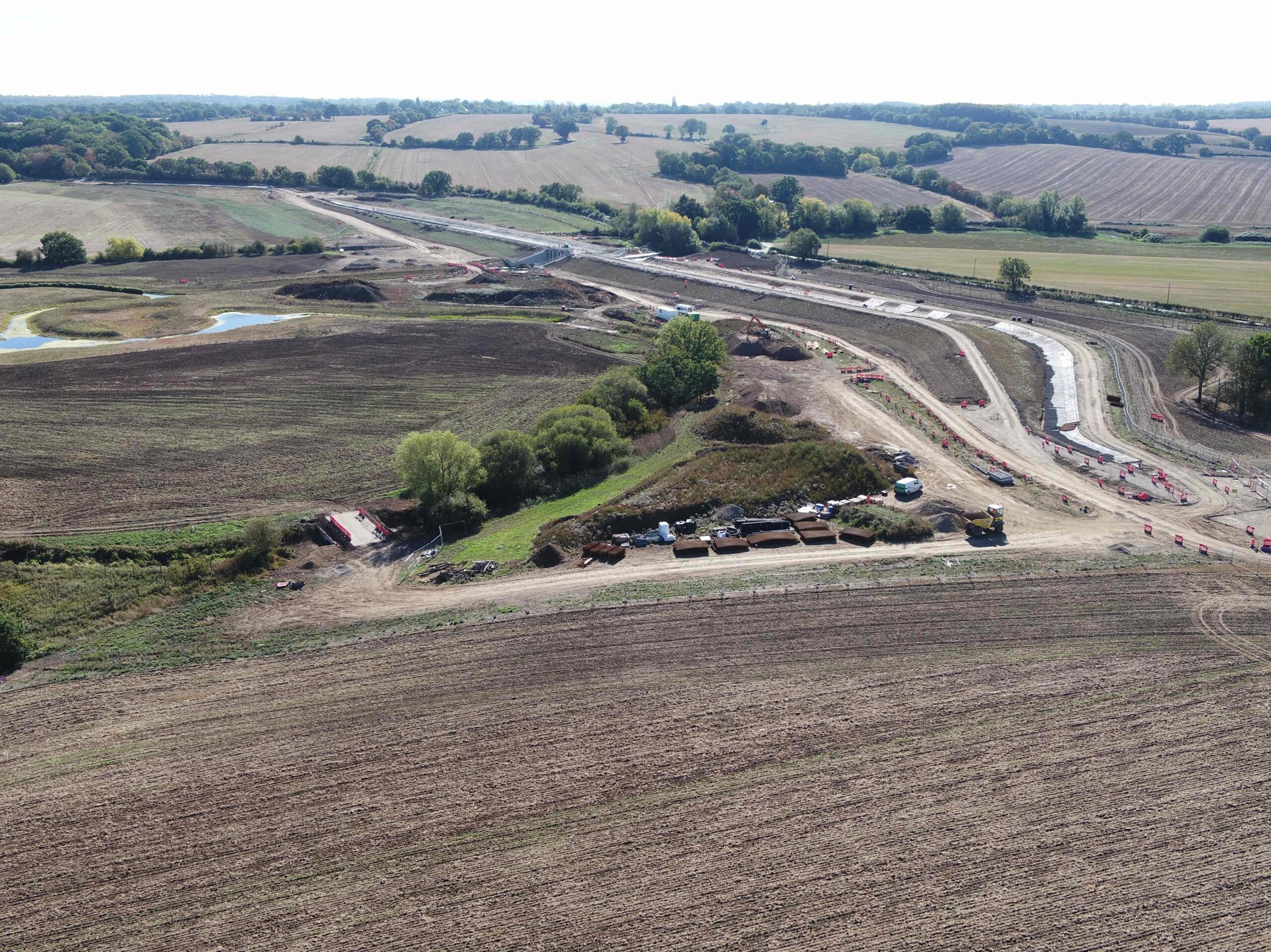
Large-scale excavation to prepare the site and provide material for embankment construction and borrow pit reinstatement.
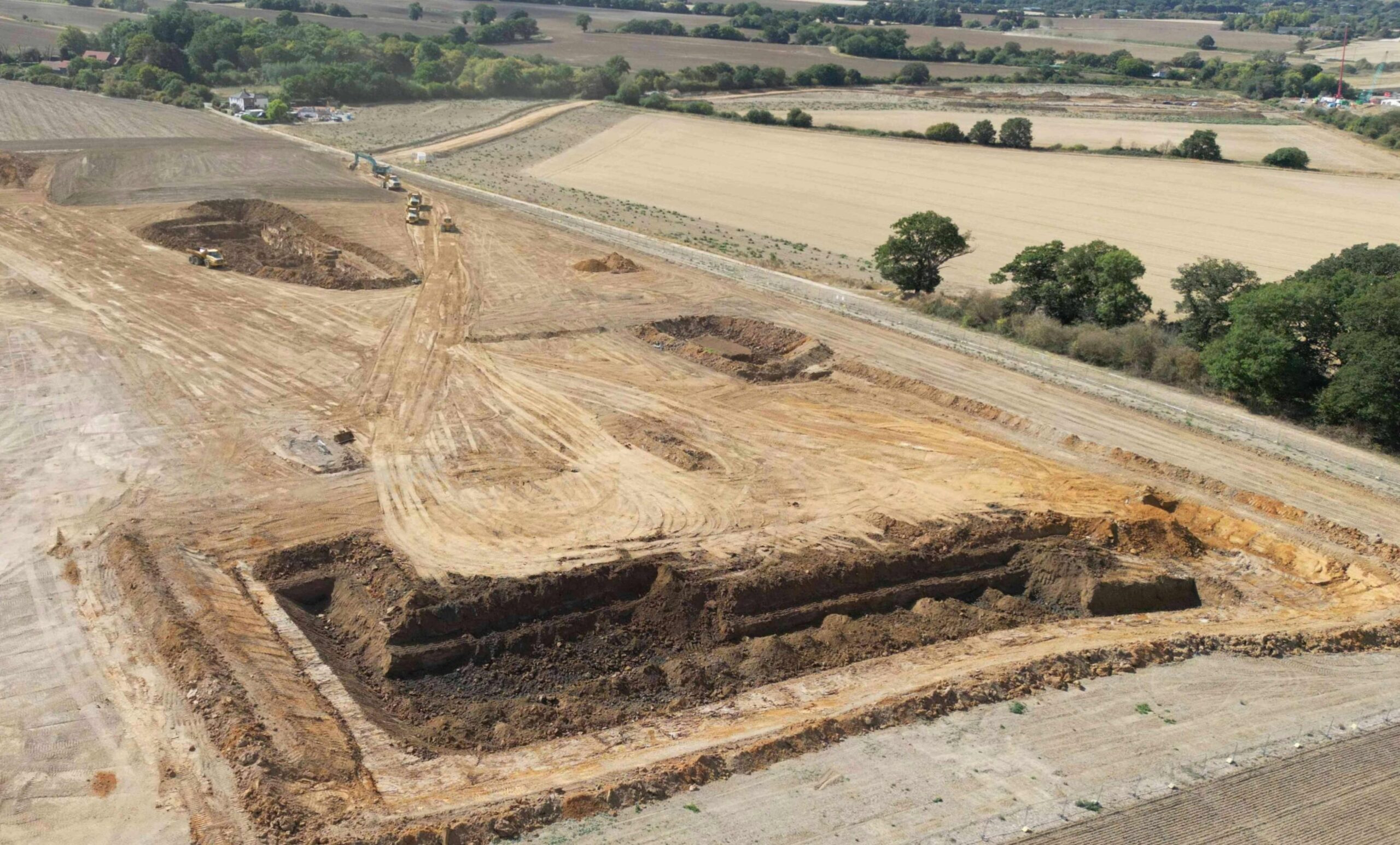
of backfill used to reinstate the borrow pit
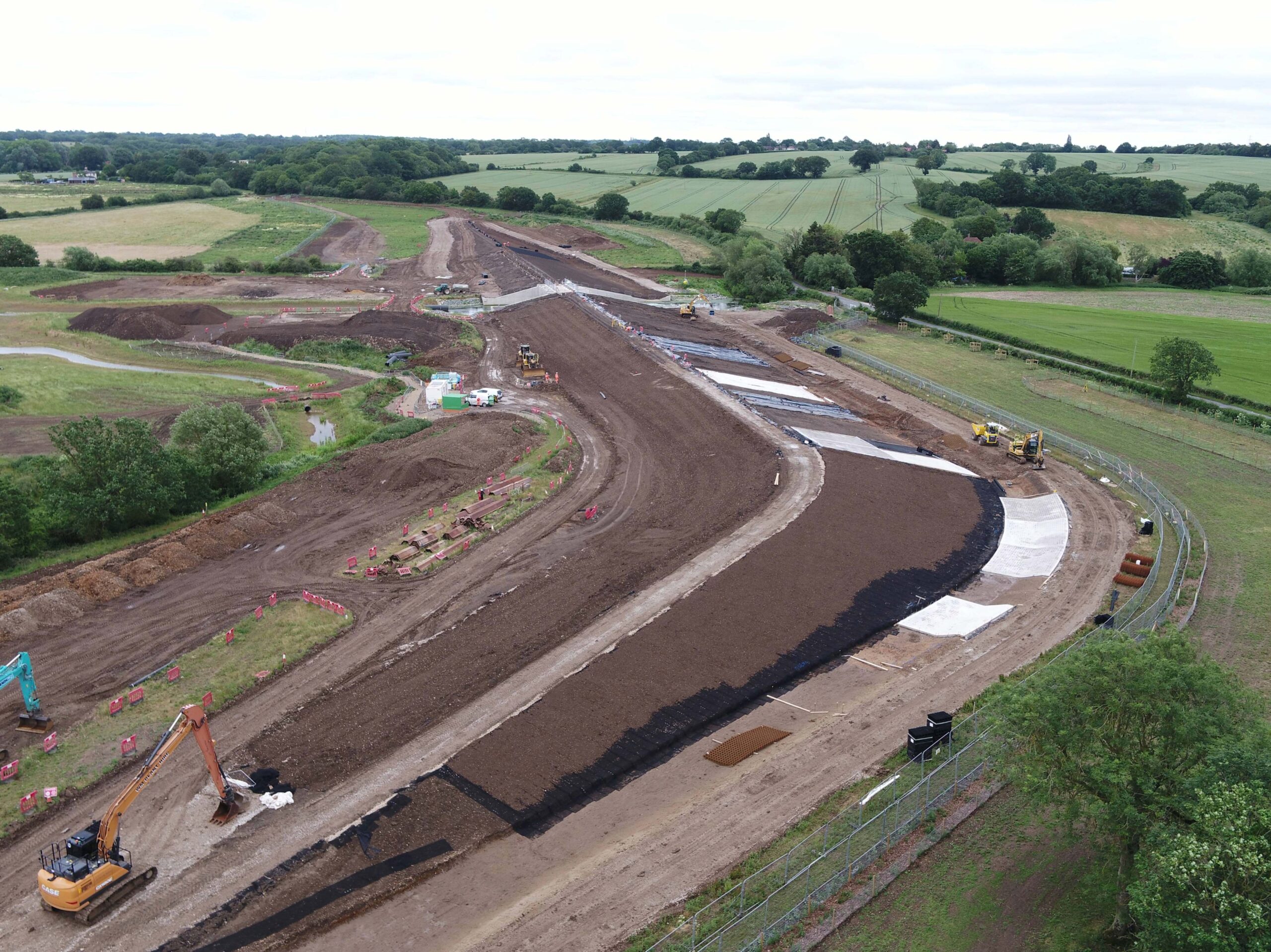
Existing material was used to backfill the borrow pit, restoring the area as part of the wider site reinstatement works.
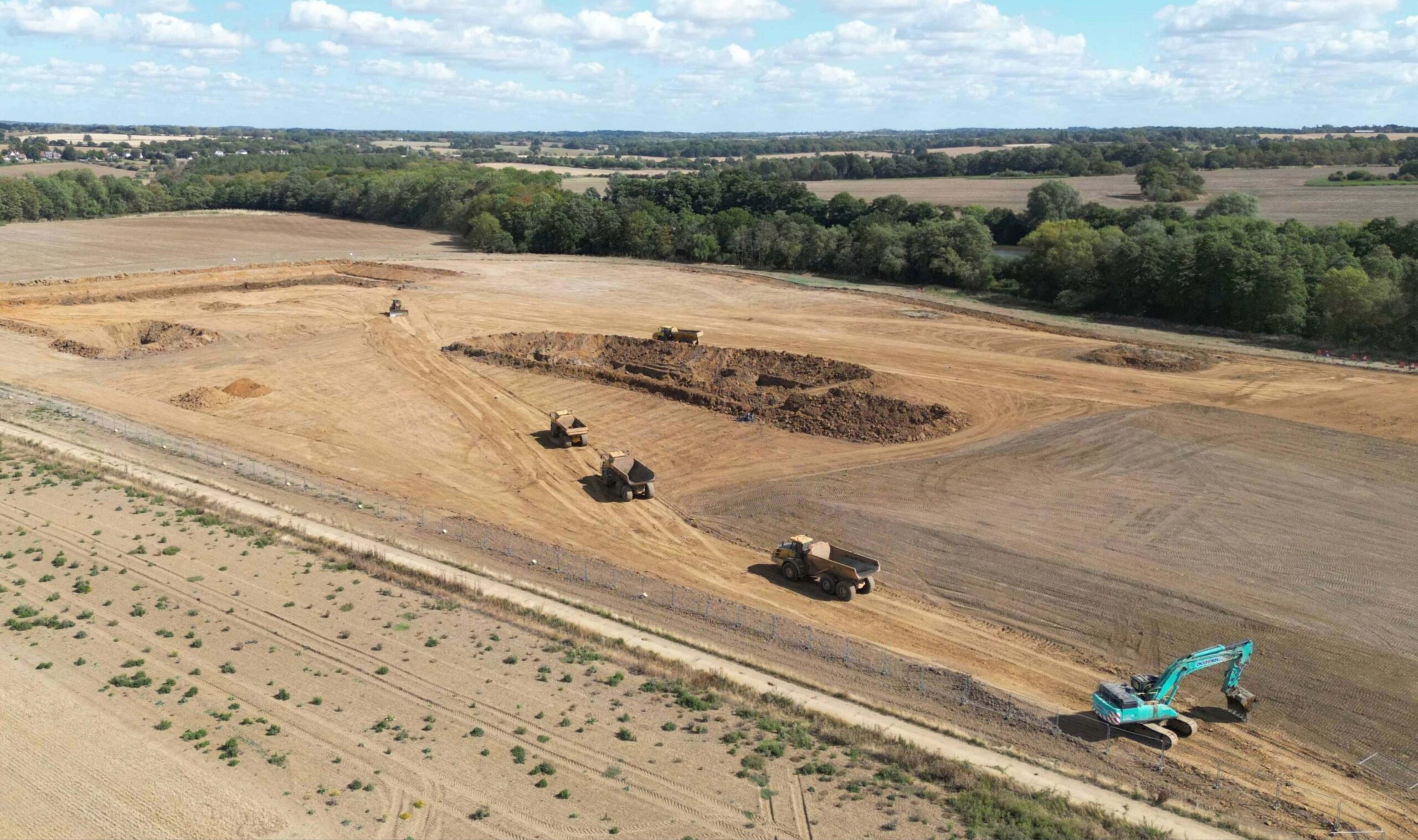
of excavated clay used to construct the embankment
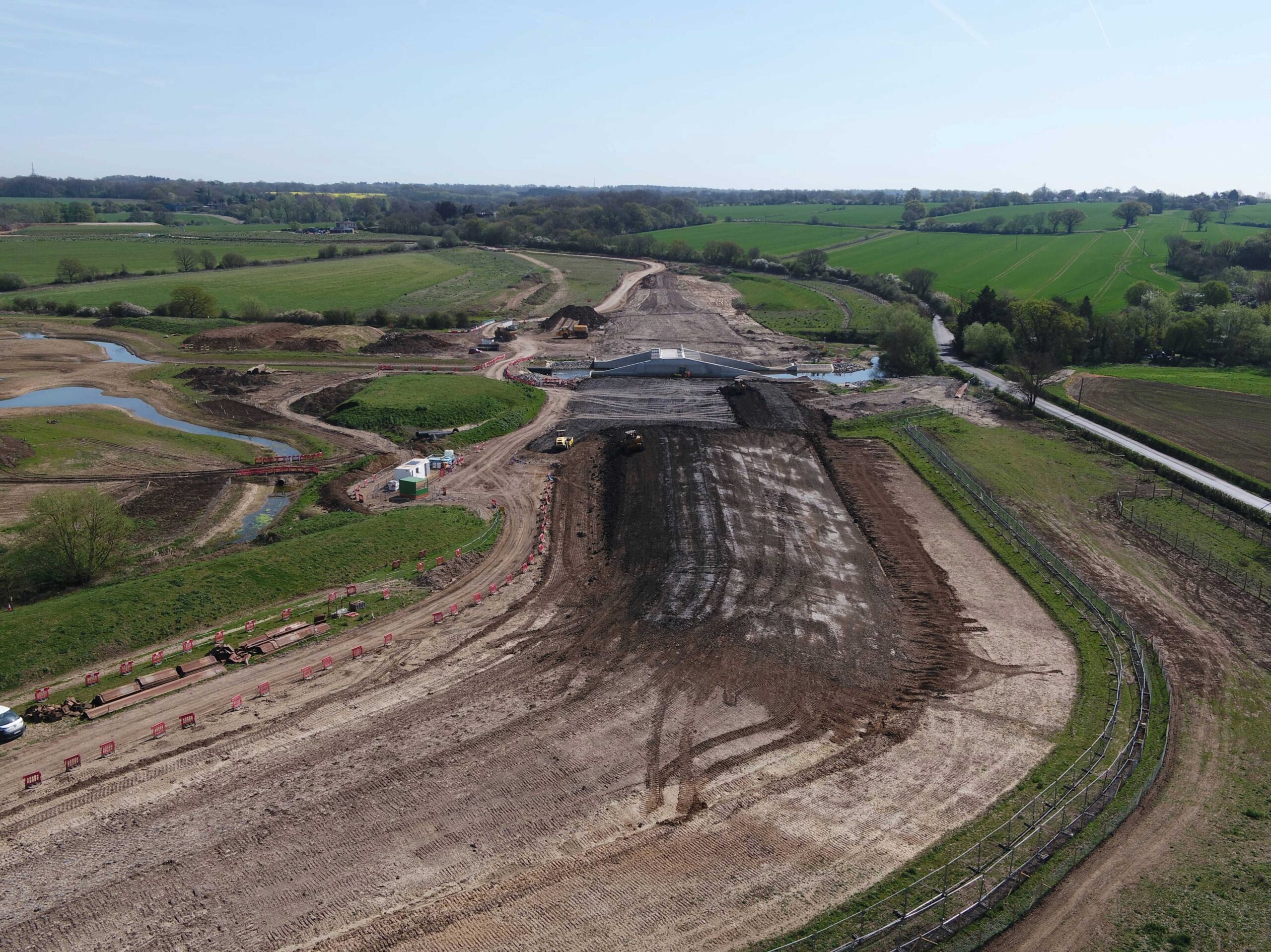
Excavated clay was reused on site to build the river embankment, reducing the need for imported materials.
Related projects


